How Blockchain Is Changing Payments and Financial Services
An educational overview of how blockchain and distributed ledger technology transform financial infrastructure, payments, securities settlement, and trade finance.
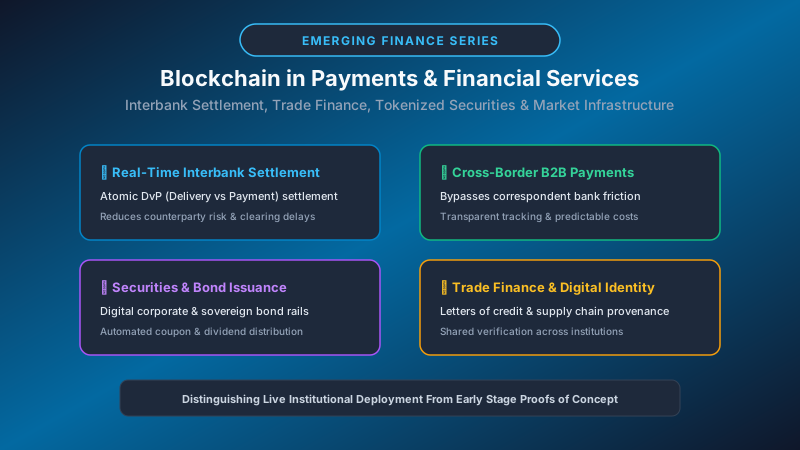
How Blockchain Is Changing Payments and Financial Services
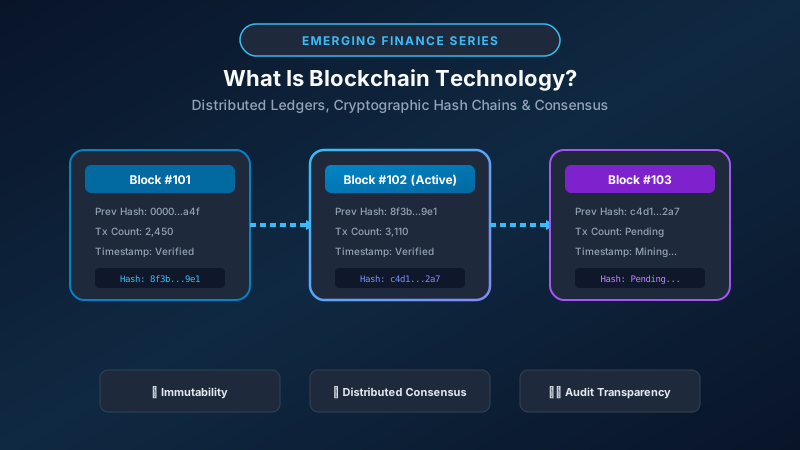
While early discussion around what-is-blockchain focused heavily on retail cryptocurrencies like bitcoin-explained, global financial institutions and central banks are evaluating distributed ledger technology (DLT) to modernize core market infrastructure.
Legacy financial systems rely on siloed databases, manual reconciliation processes, and multi-day clearing cycles. By deploying shared ledgers, financial institutions aim to streamline interbank settlement, reduce counterparty risk, and automate complex transactions.
1. Core Financial Service Applications
                          ┌── 1. Interbank Clearing & Liquidity Management
                          │
Institutional Blockchain ─┼── 2. Cross-Border Commercial Payments (Stablecoins)
Applications              │
                          ├── 3. Tokenized Securities & Digital Bond Issuance
                          │
                          └── 4. Trade Finance & Supply Chain Documentation
1. Interbank Clearing and Intraday Liquidity
Commercial banks manage billions in daily liquidity. Distributed ledgers enable banks to execute atomic settlement—the simultaneous, instantaneous exchange of cash and collateral (Delivery vs. Payment, or DvP). This eliminates clearing delays and reduces collateral tied up in pre-funding accounts.
2. Cross-Border B2B Payments
Traditional international commercial payments require routing messages through multiple correspondent banks. Utilizing regulated what-are-stablecoins or institutional ledger rails enables 24/7 direct settlement across borders. See stablecoins-cross-border-payments.
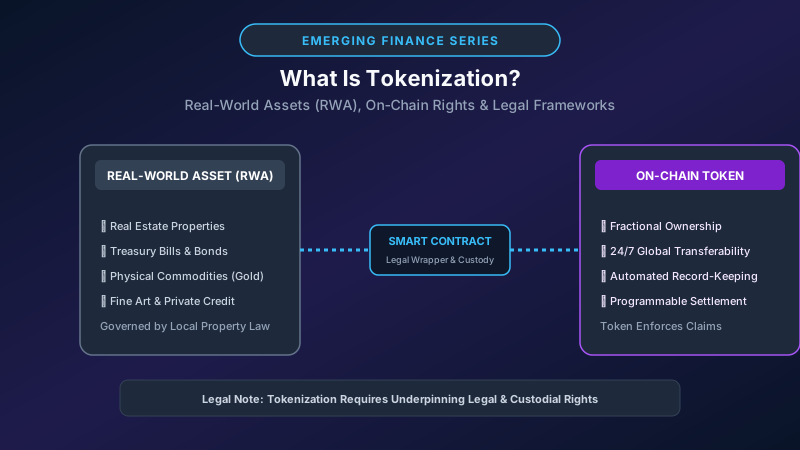
3. Tokenized Securities and Debt Issuance
Corporations and sovereign entities increasingly issue bonds directly on distributed ledgers. Smart contracts handle automated coupon payouts and maturity redemptions directly to token holders' addresses. Learn more in what-is-tokenization.
4. Trade Finance and Letters of Credit
International trade involves complex paperwork (bills of lading, letters of credit, customs approvals). Shared ledgers provide importers, exporters, shipping companies, and banks with a single, tamper-resistant record of shipment milestones.
2. Comparing Legacy Financial Infrastructure with Blockchain Rails
Legacy Clearing Rail (Multi-Siloed Registries):
Bank A Database ──► Intermediary Clearinghouse ──► Custodian Settlement ──► Bank B Database
(T+1 to T+2 Settlement Delays • Manual Reconciliation)
Distributed Ledger Rail (Single Shared Truth):
Bank A Node ──────► Shared Cryptographic Ledger ◄────── Bank B Node
(Instant Atomic DvP Settlement • Automated Reconciliation)
| Infrastructure Feature | Legacy Banking Infrastructure | Blockchain / DLT Infrastructure |
|---|---|---|
| Ledger Architecture | Isolated private databases requiring interbank reconciliation. | Shared, synchronized cryptographic ledger across nodes. |
| Settlement Speed | T+1 to T+2 days for securities; business hours for wires. | Instant (Atomic) or near-real-time 24/7/365 settlement. |
| Counterparty Risk | Credit risk held during settlement delays. | Minimized via simultaneous Delivery-vs-Payment (DvP). |
| Transaction Automation | Manual processing and scheduled batch scripts. | Programmable smart contracts executing conditional logic. |
3. Production Deployments vs. Emerging Concepts
It is essential to distinguish between live institutional systems operating today and experimental proofs of concept:
Production / Live Systems ────────────────────────────────► Emerging / Experimental Concepts
  • Institutional Interbank Repos                           • Universal Cross-Border CBDC Ledgers
  • Corporate Digital Bond Issuance                         • Autonomous AI Financial Clearing
  • Regulated Fiat-Backed Stablecoin Payments                • Multi-Sovereign Settlement Networks
- Live Production Infrastructure: Institutions actively process institutional repo trades and private bond issuances on permissioned ledgers daily.
- Emerging Interoperability: Projects connecting legacy messaging rails (such as SWIFT) with public and private blockchains represent an evolving area of development. Explore financial technology integration in open-banking-apis-explained.
4. Key Takeaways
- Financial institutions deploy blockchain ledgers to reduce clearing delays and lower operational costs.
- Atomic settlement enables simultaneous asset and payment transfer, eliminating settlement risk.
- Primary applications include interbank liquidity, cross-border B2B payments, securities issuance, and trade finance.
- Full adoption requires overcoming regulatory compliance, privacy, and legacy system integration challenges.
5. Frequently Asked Questions
How does central bank interest rate policy affect digital financial market rails?
To examine how central bank interest rates, liquidity cycles, and monetary policy influence digital asset valuations, read bitcoin-interest-rates-explained.
How do Central Bank Digital Currencies (CBDCs) interact with commercial bank rails?
For a detailed analysis comparing official sovereign digital currencies with private stablecoins, consult cbdcs-vs-stablecoins-vs-cryptocurrency.
Educational Disclaimer
This article is provided strictly for general educational and informational purposes. MoneyTalkin' does not provide technology integration, banking, or investment advice. Distributed ledger systems carry operational, regulatory, and market risks.
MoneyTalkin' provides financial education, educational concepts, and general informational guides. Articles do not constitute personalized financial, investment, legal, or tax advice. Financial products, rates, terms, and regulatory rules change frequently; consult a qualified financial professional regarding your specific situation. Read our full Disclaimer Policy.
Written by MoneyTalkin'
MoneyTalkin' researches and publishes objective financial education content, money management fundamentals, and practical financial guides.
Related Technical Articles
Explore related topics in this cluster to deepen your understanding.