CBDCs vs. Stablecoins vs. Cryptocurrency: What's the Difference?
A neutral educational guide comparing CBDCs, stablecoins, and cryptocurrencies across central bank issuance, reserve backing, privacy, and technology rails.
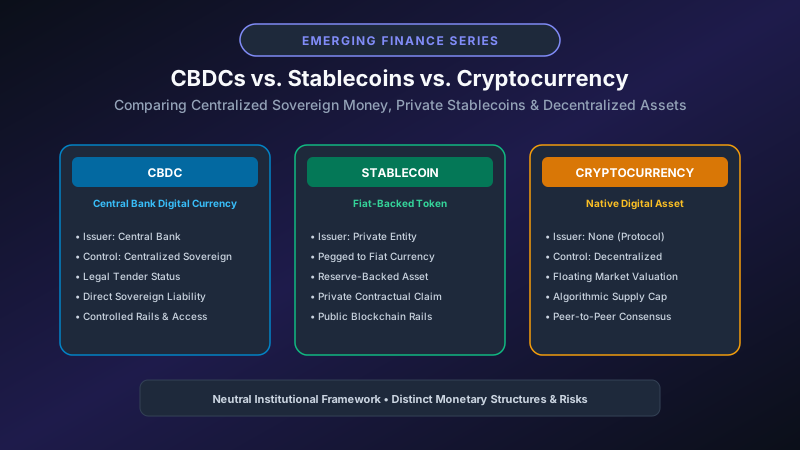
CBDCs vs. Stablecoins vs. Cryptocurrency: What's the Difference?
As financial technology evolves, three distinct concepts dominated discussions regarding digital money: Central Bank Digital Currencies (CBDCs), Stablecoins, and Decentralized Cryptocurrencies.
While all three utilize digital formats and cryptographic principles, they differ fundamentally in their issuing authority, monetary status, centralization level, privacy implications, and intended economic roles. This guide provides a neutral, structured breakdown comparing these three digital money models.
1. Three-Way Comparative Framework
                          ┌── 1. CBDC: Sovereign Liability / Central Bank Control
                          │
Digital Money Taxonomy ───┼── 2. Stablecoin: Private Liability / Fiat-Pegged Reserve Token
                          │
                          └── 3. Cryptocurrency: Protocol Token / Decentralized Consensus
| Dimension | Central Bank Digital Currency (CBDC) | Private Stablecoin | Decentralized Cryptocurrency |
|---|---|---|---|
| Issuing Authority | Sovereign Central Bank (e.g., ECB, Fed, PBOC) | Private Corporation / Protocol | None (Open-Source Algorithmic Protocol) |
| Monetary Nature | Direct Sovereign Liability; Official Legal Tender | Private Contractual Claim against Reserves | Native Protocol Asset; Unbacked Token |
| Centralization | Fully Centralized Central Bank Control | Centralized Issuer Oversight | Decentralized Peer-to-Peer Network |
| Value Stability | Fixed to National Currency Unit (1 CBDC = $1 Fiat) | Target Pegged to Reference Fiat (e.g., 1:1 USD) | Floating Market-Determined Valuation |
| Ledger Access | Permissioned Network / Centralized Clearing | Public or Private Blockchain Networks | Public Open Permissionless Ledgers |
| Privacy Design | Regulatory Identity Verification (AML/KYC) | Public Ledger Address Transparency | Pseudonymous Public Ledger Entries |
2. Examining the Three Models in Detail
1. Central Bank Digital Currencies (CBDCs)
A CBDC is a digital form of a country's sovereign currency issued directly by its monetary authority.
- Retail CBDCs: Designed for everyday consumer and business payments as a digital equivalent of physical banknotes.
- Wholesale CBDCs: Designed for interbank clearing, cross-border settlement, and institutional financial market infrastructure.
- Status: Central banks around the world (including the ECB, Bank of England, and People's Bank of China) are at varying stages of research, prototyping, or pilot testing. A central bank launching a retail CBDC depends on statutory authority and national policy frameworks.
2. Private Stablecoins
Stablecoins are privately issued digital tokens designed to track the value of a fiat currency.
- Reserves & Pegs: Most fiat-backed stablecoins hold bank deposits and short-term debt instruments (such as T-bills) to back issued tokens. Learn more in what-are-stablecoins.
- Comparison with Banks: Stablecoins operate on public networks but lack direct government deposit insurance. See stablecoins-vs-bank-deposits.
3. Decentralized Cryptocurrencies
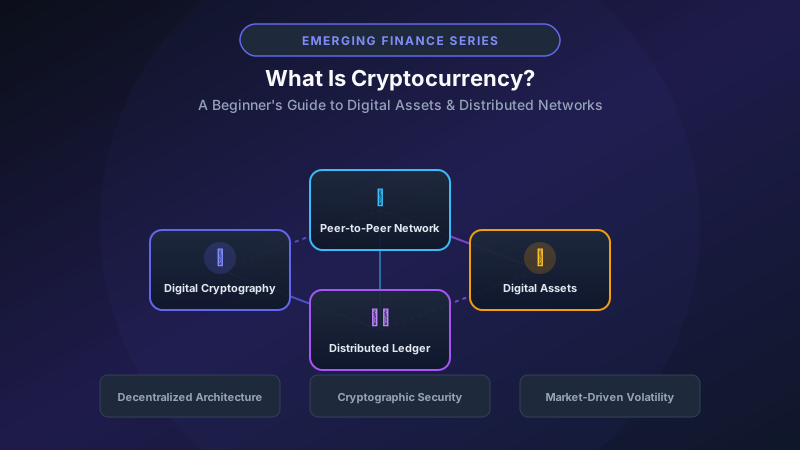
Cryptocurrencies—such as bitcoin-explained—are unbacked, open-source protocol assets.
- Decentralization: No single entity controls the ledger or alters consensus rules unilaterally.
- Volatility: Values fluctuate based on global supply, demand, and liquidity cycles without central bank price stabilization.
3. Privacy, Compliance, and Policy Considerations
                        ┌── Physical Cash: Full Anonymity / No Digital Trace
                        │
Privacy Spectrum ───────┼── Public Cryptocurrencies: Pseudonymous Addresses / Public Ledger
                        │
                        └── CBDCs & Bank Accounts: Verified Identity / Regulatory Auditing
- Anti-Money Laundering (AML): Sovereign money systems (CBDCs and regulated bank rails) enforce identity verification to combat illicit finance and tax evasion.
- Transaction Monitoring: CBDC proposals generally incorporate tiered compliance features, balancing user transaction privacy with statutory legal oversight.
- Programmability & Policy: Central banks research CBDC programmability for targeted fiscal distribution, whereas stablecoin issuers use smart contracts for automated commercial logic.
4. Key Takeaways
- CBDCs are official digital liabilities of sovereign central banks.
- Stablecoins are privately issued tokens pegged to fiat currency reserves.
- Cryptocurrencies are unbacked, decentralized digital assets governed by protocol code.
- Each digital money form carries distinct trade-offs between stability, privacy, regulatory oversight, and technical risk.
5. Frequently Asked Questions
Will CBDCs replace cash and commercial bank accounts?
Central bank policy papers generally emphasize that CBDCs are explored as a complement to physical cash and commercial bank deposits rather than a complete replacement.
Where can I read more about stablecoins in international trade?
For an analysis of how digital tokens function in global remittances and trade, read stablecoins-cross-border-payments.
Educational Disclaimer
This article is strictly educational and non-promotional. MoneyTalkin' does not provide central banking, investment, or legal advice. Digital money systems carry varying technological, legal, and economic risk profiles.
MoneyTalkin' provides financial education, educational concepts, and general informational guides. Articles do not constitute personalized financial, investment, legal, or tax advice. Financial products, rates, terms, and regulatory rules change frequently; consult a qualified financial professional regarding your specific situation. Read our full Disclaimer Policy.
Written by MoneyTalkin'
MoneyTalkin' researches and publishes objective financial education content, money management fundamentals, and practical financial guides.
Related Technical Articles
Explore related topics in this cluster to deepen your understanding.