Trading App Gamification: How Design Can Influence Risk-Taking
An objective examination of trading app gamification, analyzing digital engagement features, behavioral finance biases, overtrading risks, and regulatory reviews.
Trading App Gamification: How Design Can Influence Risk-Taking
The democratization of stock trading through smartphone applications has provided millions of retail investors with frictionless access to U.S. financial markets. Features such as instant mobile account opening, zero commission fees, and fractional share purchasing have significantly lowered traditional barriers to entry.
However, academic researchers, behavioral economists, and financial regulators have increasingly focused on the psychological impact of app gamification—the practice of incorporating game-design elements into non-game digital applications.
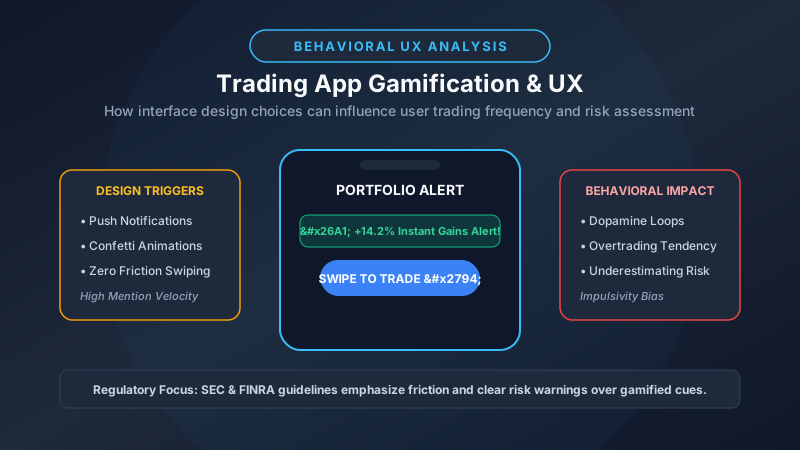
Features like push notifications, celebratory animations (such as digital confetti or flashing icons), social leaderboards, and one-swipe trade execution can influence user decision-making processes.
This article provides an objective analysis of how digital design choices interact with human cognitive biases, what academic research suggests about trading frequency, and how regulators like the SEC and FINRA view gamified financial interfaces.
1. What Is Financial App Gamification?
Gamification in financial technology involves embedding interactive design mechanisms intended to increase user engagement, time spent on-platform, and feature interaction.
Digital Nudge -> Immediate Action Trigger -> Instant Feedback -> Habitual Engagement Loop
Common digital design mechanisms implemented across retail trading interfaces include:
- Visual & Haptic Rewards: Celebratory graphics, confetti animations, sound effects, or phone vibrations accompanying account funding or trade completion.
- Frictionless Trade Execution: Replacing multi-step confirmation screens with single-swipe or one-click purchase mechanisms.
- Continuous Push Notifications: Real-time mobile alerts highlighting top daily gainers, sudden price spikes, or trending social stocks.
- Social Feeds & Leaderboards: Features allowing users to compare trade performance, share portfolio positions, or copy popular trades.
2. Behavioral Finance Principles at Play
Behavioral finance research indicates that human decision-making relies on mental shortcuts (heuristics) that can be triggered by specific environmental cues:
1. Dopamine Feedback Loops
When an application delivers unexpected positive stimuli—such as a colorful notification showing a stock rising 10%—the brain releases dopamine, reinforcing the desire to check the application repeatedly. Research suggests that variable, unpredictable reward schedules generate stronger habitual responses than static interfaces.
2. Present Bias & Friction Reduction
Present bias describes the human tendency to value immediate rewards over larger future gains. By removing operational friction (such as trade review screens or password re-entry), digital interfaces encourage immediate execution, reducing the time available for rational risk evaluation.
3. Overconfidence Bias & Social Proof
Viewing social leaderboards or trending stock lists can induce overconfidence bias, causing retail users to overestimate their market knowledge. Furthermore, social proof leads individuals to assume that if thousands of users are buying a volatile asset, the trade must be safe or profitable.
4. Loss Aversion & The Sunk Cost Fallacy
Behavioral economists Daniel Kahneman and Amos Tversky demonstrated that the psychological pain of losing $100 is roughly twice as intense as the pleasure of gaining $100. In digital trading environments, loss aversion can interact with app design to cause sunk cost escalation: traders hold losing positions far too long in hopes of breaking even, while selling winning positions quickly to lock in psychological satisfaction.
3. Choice Architecture in Financial UI Design
In behavioral economics, choice architecture refers to how choices are presented to consumers and how that presentation influences decision outcomes:
- Default Options: Setting aggressive default values—such as defaulting to market orders rather than limit orders, or auto-selecting high-leverage options contracts—biases users toward executing trades faster without adjusting order parameters.
- Visual Hierarchy & Accent Colors: Using bright green buttons for buy actions and muted colors for cancel or risk disclosure screens creates visual momentum that guides user navigation toward order completion.
- Information Architecture: Placing volatile, trending tickers at the top of home screens while burying detailed financial reports or risk warnings multiple clicks deep subtly shifts user focus toward short-term speculative trading.
4. What Research Studies Suggest About Overtrading
Academic studies examining retail trading data suggest that gamified app features may be associated with increased trading frequency:
- Trading Frequency & Net Returns: Classic behavioral research (such as landmark studies by Barber and Odean) established that frequent individual stock trading generally correlates with lower net portfolio performance due to bid-ask spread costs and behavioral missteps.
Option Volume Anomalies & Retail Options UX
Recent university studies analyzing trading app usage patterns indicate that users exposed to aggressive push notifications and simplified option interfaces executed a higher proportion of short-term, high-leverage options trades relative to traditional buy-and-hold equity strategies.
Automated Options Approval Tiers
Historically, brokers required manual review and extensive investment experience documentation before granting options trading authorization. Simplified mobile onboarding workflows often utilize automated questionnaire scoring that allows inexperienced retail investors to obtain Level 2 options trading approval (enabling call and put purchasing) within minutes of account opening, increasing exposure to complex derivative products.
5. Regulatory Oversight & Legal Scrutiny
U.S. financial regulators have increasingly scrutinized digital engagement practices (DEPs):
The SEC's Stance on Digital Engagement Practices (DEPs)
In 2021, the Securities and Exchange Commission (SEC) issued a Request for Information regarding DEPs, expressing concern that gamification features could nudge retail investors into frequent, high-risk trading strategies aligned with broker revenue models (such as payment for order flow).
FINRA Regulatory Notices
The Financial Industry Regulatory Authority (FINRA) reminded member firms that digital interface design elements must comply with fundamental customer suitability and disclosure obligations:
FINRA Rule 2111 (Suitability) + SEC Regulation Best Interest (Reg BI) = Requirement for Fair, Non-Misleading Interfaces
State Regulatory Actions
State regulators, including the Massachusetts Securities Division, have brought administrative enforcement actions alleging that certain retail brokerages used gamification and behavioral nudges to encourage inexperienced investors to make continuous, risky trades without adequate risk education.
Attention-Driven Asset Purchasing
Financial economic research demonstrates that retail investors disproportionately purchase stocks that capture national media headlines or social media chatter. High-velocity mobile app push alerts amplify this effect by continuously steering retail attention toward highly volatile intraday market movers, compounding emotional decision-making.
6. Distinguishing Useful UX Improvements from Gamification
Not all modern app features constitute harmful gamification. Many digital innovations provide genuine utility:
| Feature Type | Beneficial Usability (UX) | Potential Gamification Risk |
|---|---|---|
| Trade Execution | Clear order preview screens detailing costs | One-swipe instant trade execution without confirmations |
| Notifications | Security alerts & fundamental dividend updates | Constant price movement nudges on volatile meme stocks |
| Interface Design | Dark mode & intuitive navigation charts | Celebratory confetti graphics on trade completion |
| Educational Tools | Embedded articles on dollar-cost averaging | Social feeds showcasing high-leverage option wins |
6. How Retail Investors Can Build Digital Discipline
Investors using mobile trading apps alongside managing a taxable brokerage account or selecting index funds vs. individual stocks can implement strategies to counteract digital nudges:
- Disable Non-Essential Push Notifications: Turn off price movement and trending stock alerts to reduce impulsive app checking.
- Re-Enable Trade Confirmation Screens: Use app security settings to require biometric verification or password entry before trade execution, introducing healthy reflection friction.
- Automate Long-Term Investing: Set up automatic recurring deposits and purchases for low-cost index funds, removing emotional manual trade decisions.
- Consult Educational Resources: Review educational guides on long-term asset allocation and tax-advantaged accounts before executing single-stock or derivative trades on mobile devices.
For retail derivatives growth, read Retail Options Trading Mainstream.
MoneyTalkin' provides financial education, educational concepts, and general informational guides. Articles do not constitute personalized financial, investment, legal, or tax advice. Financial products, rates, terms, and regulatory rules change frequently; consult a qualified financial professional regarding your specific situation. Read our full Disclaimer Policy.
Written by MoneyTalkin'
MoneyTalkin' researches and publishes objective financial education content, money management fundamentals, and practical financial guides.
Related Technical Articles
Explore related topics in this cluster to deepen your understanding.