NFTs Beyond Art: Ticketing, Gaming Items and Real-World Ownership
A comprehensive guide exploring functional tokenization beyond digital art, detailing event ticketing, in-game items, digital identity, and legal property distinctions.
NFTs Beyond Art: Ticketing, Gaming Items and Real-World Ownership
When non-fungible tokens (NFTs) entered mainstream public consciousness, media coverage focused almost exclusively on speculative digital art sales and high-profile picture (PFP) collections. Consequently, many observers associate NFTs solely with digital images.
At its technical core, however, an NFT is simply a unique, non-interchangeable digital certificate of entry registered on a distributed blockchain ledger. The underlying technology defines unique token identifiers, verifiable provenance, and programmable transfer logic.
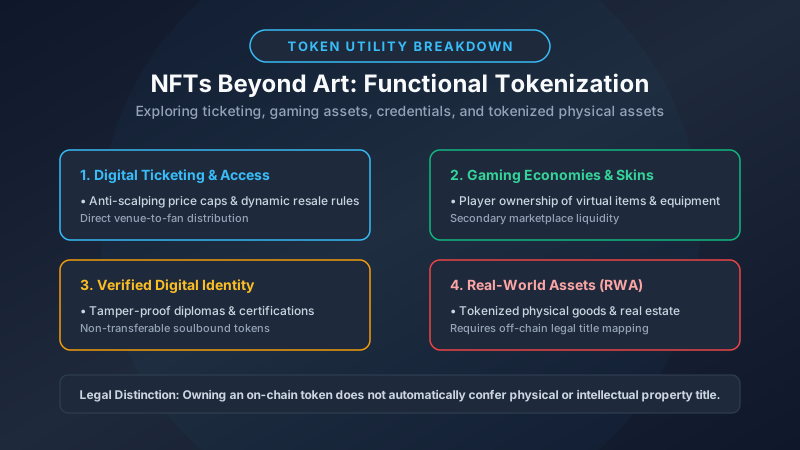
As speculative art trading has subsided, developers and enterprise organizations are deploying tokenization technology across functional use cases—including event ticketing, in-game economies, academic credentials, and tokenized real-world assets (RWA).
This article provides an objective analysis of non-art NFT applications, examining how smart contracts function in real-world settings, their technical limitations, and the essential legal distinction between on-chain token ownership and physical property title.
1. Digital Event Ticketing & Access Control
The global event ticketing industry has long faced systemic inefficiencies, including predatory secondary market scalping, counterfeit PDF tickets, and high intermediary fee structures.
Event Organizer -> Mints Programmable Ticket Token -> Secondary Resale Capped by Smart Contract -> Verified Venue QR Scanning
How Tokenized Ticketing Functions
- Anti-Counterfeiting: Each ticket is minted as a unique cryptographic token. Venue scanners verify authentic cryptographic ownership on-chain, eliminating duplicate bar code copies.
- Programmable Price Controls: Event organizers can program smart contracts to cap secondary resale markups (e.g., restricting resale to maximum 110% of face value) or enforce secondary royalty shares that redirect scalper profits back to artists and venues.
- Post-Event Engagement: Expired event tickets function as persistent digital keepsakes, allowing event organizers to distribute exclusive content, merchandise discounts, or priority pre-sale access for future tours directly to verified past attendees.
2. Gaming Items & Player-Driven Economies
Traditional video games operate within closed commercial silos. When a gamer purchases a character skin or virtual item in a conventional game, the item exists solely on the publisher’s centralized database. If the publisher shuts down the servers or bans an account, the player loses all access and accumulated economic value.
Tokenized In-Game Assets
Integrating tokens into gaming architecture allows in-game assets—such as weapons, vehicles, armor, or virtual land—to exist on public blockchain networks:
- True Player Ownership: Players can export in-game items to external secondary marketplaces, trading or selling them to other players for cryptocurrency or fiat money.
- Open Secondary Liquidity: Game developers collect a small transaction fee on secondary asset transfers while players gain real economic liquidity for time invested in gameplay.
- Interoperability Realities & Limits: While enthusiasts frequently tout cross-game interoperability (using a sword from Game A inside Game B), technical reality requires developers of both games to manually render 3D models, balance game mechanics, and maintain compatible code engines. Thus, inter-game utility remains limited primarily to games built within the same development ecosystem.
3. Verified Digital Credentials & Identity
Verifying academic degrees, professional certifications, and employment histories currently requires slow, manual background checks conducted through centralized third-party agencies.
"Soulbound" Non-Transferable Tokens
To address identity verification, institutions deploy Soulbound Tokens (SBTs)—non-transferable digital tokens permanently tied to a specific blockchain wallet address:
- Tamper-Proof Diplomas: Universities can issue degree credentials as non-transferable tokens directly to a graduate's wallet. Employers verify academic credentials instantaneously by checking the issuing university’s public cryptographic signature.
- Professional Licensing: Medical boards, legal bar associations, and technical certification bodies can issue revocable digital credentials that automatically display active, suspended, or expired compliance status.
4. Real-World Assets (RWA) & Physical Tokenization
One of the fastest-growing sectors in digital finance is Real-World Asset (RWA) tokenization—creating digital tokens that represent economic stakes in physical or traditional financial assets:
Tokenized Commercial Real Estate & Debt
Tokenizing commercial property allows fractional ownership stakes to be represented by digital tokens:
- Special Purpose Vehicle (SPV) Mapping: A property is owned by a legal entity (such as a Delaware LLC). The digital tokens represent equity shares in the LLC, granting token holders rights to proportional rental income distributions.
- Chain-of-Custody Oracles: Smart contracts rely on independent off-chain data providers (oracles) to verify physical property status, property insurance coverage, and municipal property tax payments before executing automatic rental yield payouts.
5. Critical Legal Boundary: Token Ownership vs. Legal Title
A critical misconception in digital asset discussions is assuming that holding an NFT on a blockchain automatically grants legal ownership of the underlying physical asset or intellectual property.
On-Chain Token Ownership != Off-Chain Legal Property Title (Unless Explicitly Mapped by Contract)
The Legal Reality
- On-Chain Token vs. Off-Chain Rights: A blockchain ledger records only the transfer of digital tokens between wallet addresses. It does not alter state property registries, deed recording offices, or international copyright law by itself.
- The Legal Bridge Requirement: For an NFT to confer actual legal ownership over a physical house, vehicle, or copyright, there must be a valid, legally binding physical contract or legal framework (such as a Special Purpose Vehicle or Limited Liability Company structure) explicitly binding the token to the underlying legal title.
- Custody & Physical Risk: If a physical asset stored in a vault is stolen, damaged, or fraudulently transferred off-chain, possessing the corresponding digital token does not magically restore the physical asset.
Intellectual Property (IP) Licensing Models
When an investor purchases a token, the accompanying intellectual property rights depend entirely on the issuer's explicit license terms:
- Personal Display Rights Only: Most commercial NFT projects grant buyers only a limited, non-exclusive license to display the digital artwork on personal social profiles or inside virtual galleries. The creator retains all underlying copyrights, commercial licensing rights, and derivative work rights.
- Commercial Use Licenses: Select projects (such as Bored Ape Yacht Club or Pudgy Penguins) grant token holders commercial exploitation rights up to specific revenue caps, permitting buyers to feature their tokenized avatar on physical merchandise or in entertainment branding.
- Creative Commons Zero (CC0): Projects operating under CC0 dedicate all intellectual property rights to the public domain, allowing anyone to copy, modify, and monetize the artwork without purchasing the token.
6. Functional Comparison of Tokenization Models
| Tokenization Category | Primary Benefit | Key Technical Mechanism | Main Adoption Barrier |
|---|---|---|---|
| Event Ticketing | Anti-scalping & verifiable origin | Dynamic QR code + smart contract resale caps | Legacy venue ticketing exclusivity contracts |
| Gaming Assets | Open player secondary liquidity | ERC-721 / ERC-1155 token standards | Game engine balancing & rendering compatibility |
| Digital Credentials | Instant tamper-proof verification | Non-transferable Soulbound Tokens (SBTs) | Institutional adoption & privacy protections |
| Real-World Assets (RWA) | Fractional liquidity & fast settlement | SPV legal mapping + tokenized equity | Complex multi-jurisdictional securities law |
7. Strategic Conclusions for Investors & Consumers
As non-art tokenization applications mature, practical utility is replacing speculative hype. Understanding the capabilities and boundaries of tokenization technology helps individuals evaluate digital asset developments objectively:
- Distinguish between pure speculative collectibles and functional utility tokens.
- Remember that on-chain token transfers require explicit off-chain legal contracts to enforce physical property rights.
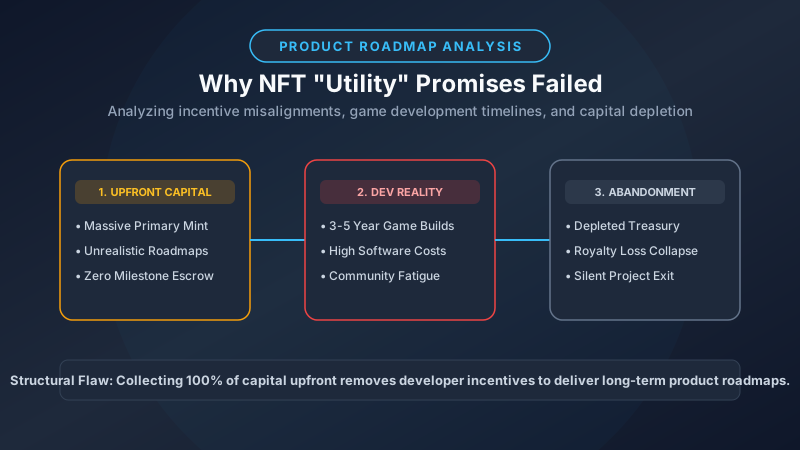
- Explore related educational analyses on the post-downturn NFT market, evaluating why NFT utility failed, economic concepts of digital scarcity, and mechanics of fractionalized NFTs.
MoneyTalkin' provides financial education, educational concepts, and general informational guides. Articles do not constitute personalized financial, investment, legal, or tax advice. Financial products, rates, terms, and regulatory rules change frequently; consult a qualified financial professional regarding your specific situation. Read our full Disclaimer Policy.
Written by MoneyTalkin'
MoneyTalkin' researches and publishes objective financial education content, money management fundamentals, and practical financial guides.
Related Technical Articles
Explore related topics in this cluster to deepen your understanding.