How to Calculate Your Net Worth: A Simple Step-by-Step Guide
A practical personal finance guide to calculating net worth, auditing assets vs liabilities, tracking wealth over time, and understanding financial metrics.
How to Calculate Your Net Worth: A Simple Step-by-Step Guide
Tracking personal financial progress requires measuring more than just your monthly salary or checking account balance. A high income alone does not guarantee financial security if it is accompanied by equal or greater debt obligations. The standard metric used to measure overall economic position is net worth.
Your net worth provides a comprehensive snapshot of your financial health at a specific point in time. It reflects the total value of everything you own minus everything you owe.
Understanding how to calculate your net worth—including categorizing liquid vs. illiquid assets, accounting for short-term and long-term liabilities, tracking changes over time, and recognizing the limitations of net worth metrics—helps individuals build wealth alongside guides on conducting a monthly expense audit, optimizing taxable brokerage accounts, maximizing tax-advantaged retirement accounts, and securing an emergency fund.
1. What Is Net Worth?
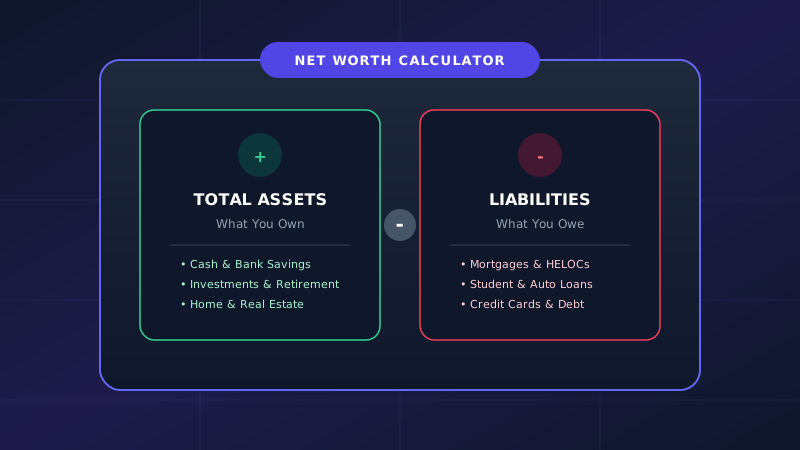
Net worth is the financial difference between your total assets (what you own) and your total liabilities (what you owe).
$$\text{Net Worth} = \text{Total Assets} - \text{Total Liabilities}$$
- Positive Net Worth: Occurs when the value of your total assets exceeds your total outstanding liabilities.
- Negative Net Worth: Occurs when your total debt liabilities exceed the cumulative market value of your assets.
Net worth is a dynamic figure that fluctuates continuously based on market price movements, debt paydowns, interest accumulation, and ongoing savings rate decisions.
2. Categorizing Your Assets (What You Own)
An asset is anything of economic value that you own that can be converted into cash or holds financial value. When calculating net worth, group assets into three distinct categories based on liquidity and purpose:
A. Liquid Cash & Cash Equivalents
Liquid assets are cash or funds that can be accessed immediately without market loss:
- Checking and standard savings balances.
- High-yield savings accounts (HYSAs) and money market funds.
- Physical currency and certificates of deposit (CDs).
B. Invested & Retirement Assets
Invested assets represent financial holdings intended for medium- and long-term wealth growth:
- Tax-Advantaged Retirement Accounts: 401(k)s, 403(b)s, traditional IRAs, Roth IRAs, and Health Savings Accounts (HSAs).
- Taxable Brokerage Accounts: Individual stocks, broad-market index funds, ETFs, corporate bonds, and mutual funds.
- Note: When valuing tax-deferred retirement accounts (like traditional 401(k)s), some analysts use gross current balances, while others adjust for estimated future income taxes upon withdrawal. Standard personal net worth tracking utilizes current market account values.
C. Physical & Personal Assets
Physical assets represent tangible property with substantial resale value:
- Primary Residence & Real Estate: The estimated fair market value of homes or investment properties (verified via recent market comps or professional appraisals).
- Vehicles: Estimated private-party resale value of automobiles, motorcycles, or boats (excluding rapid depreciation).
- Excluded Items: Personal belongings such as clothing, furniture, and everyday electronics are generally excluded from net worth calculations because their liquidated resale value is low and difficult to substantiate.
3. Categorizing Your Liabilities (What You Owe)
A liability is a financial obligation or debt that you are legally required to repay to a lender or creditor. Group liabilities into short-term and long-term debt categories:
A. Long-Term Debt Obligations
- Mortgage Debt: The remaining principal balance owed on your primary home mortgage, secondary mortgages, or HELOCs.
- Student Loans: Outstanding federal and private student loan principal balances.
- Auto Loans: Remaining loan balances owed on vehicle financing agreements.
B. Short-Term & Consumer Debt Obligations
- Credit Card Balances: Total current statement balances owed across all credit cards.
- Personal Loans & Medical Debt: Outstanding balances on unsecured personal loans, peer-to-peer loans, or unpaid medical bills.
- Other Obligations: Tax liabilities or back taxes owed to government authorities.
4. Step-by-Step Net Worth Calculation Example
To see how net worth is calculated, consider a hypothetical household compiling their financial inventory:
Step 1: List and Total All Assets
| Asset Category | Description | Current Value |
|---|---|---|
| Liquid Cash | HYSA & Checking Accounts | $15,000 |
| Retirement Accounts | 401(k) & Roth IRA Balances | $85,000 |
| Investments | Taxable Brokerage Account | $20,000 |
| Real Estate | Primary Home Estimated Market Value | $350,000 |
| Vehicles | Car Resale Value | $18,000 |
| TOTAL ASSETS (A) | $488,000 |
Step 2: List and Total All Liabilities
| Liability Category | Description | Outstanding Balance |
|---|---|---|
| Mortgage Debt | Remaining Primary Mortgage Principal | $220,000 |
| Auto Loan | Remaining Vehicle Balance | $10,000 |
| Student Loans | Federal Student Loan Balance | $12,000 |
| Credit Cards | Monthly Statement Balances | $2,000 |
| TOTAL LIABILITIES (B) | $244,000 |
Step 3: Apply the Net Worth Formula
$$\text{Net Worth} = \text{Total Assets } ($488,000) - \text{Total Liabilities } ($244,000) = \mathbf{$244,000}$$
Hypothetical calculation for illustrative purposes.
5. Understanding Negative Net Worth
Starting out with a negative net worth is common for young adults and recent graduates who have accumulated student loan debt or taken out a home mortgage before accumulating significant investment capital.
- Not a Permanent Failure: A negative net worth resulting from investments in higher education or reasonable home equity is a starting baseline, not a indicator of financial failure.
- Directional Trajectory: Focus on the trajectory of your net worth over time. As you make monthly debt paydowns and consistently invest cash into retirement accounts, net worth transitions from negative to positive.
6. How to Track Net Worth Over Time
Consistent tracking helps measure whether your financial habits are moving you closer to your long-term goals.
A. Recommended Tracking Frequency
- Quarterly or Semi-Annually: Tracking net worth every 3 to 6 months is optimal.
- Avoid Daily Tracking: Checking net worth daily can induce anxiety because stock market volatility and home price fluctuations cause short-term paper gains and losses that do not reflect underlying progress.
B. Accounting for Asset Price Volatility
Understand that certain asset valuations change constantly:
- Stock Portfolios: Fluctuate with daily financial market price movements.
- Home Values: Depend on local real estate market conditions and comparable sales.
- Vehicles: Depreciate in value over time. Update vehicle values downward annually to maintain realistic figures.
7. Limitations of Net Worth as a Health Metric
While net worth is a powerful financial metric, it does not tell the complete story of your financial health on its own:
- Illiquidity Risk ("House Rich, Cash Poor"): An individual may have a $500,000 net worth tied entirely up in home equity, but possess zero liquid cash reserves. If an emergency occurs, they cannot pay bills with home equity without taking out debt or selling the property.
- Cash Flow & Debt Service: Net worth does not measure monthly cash flow. A household with high net worth can still face financial stress if high debt service payments consume their monthly income.
- Tax Liabilities: Stated gross net worth does not deduct future income taxes owed on traditional 401(k) or IRA withdrawals upon retirement.
For these reasons, evaluate net worth alongside liquid emergency funds and monthly cash flow metrics.
8. Summary Checklist for Tracking Net Worth
Follow this practical checklist to calculate and monitor your net worth:
- Gather Account Statements: Collect recent balance statements for checking, savings, retirement, brokerage, and loan accounts.
- Estimate Property Values Realistically: Use conservative market comparisons to value real estate and vehicles.
- Calculate Total Assets: Add liquid cash, investments, retirement accounts, and real estate.
- Calculate Total Liabilities: Add mortgages, student loans, auto loans, credit card balances, and personal debts.
- Subtract Liabilities from Assets: Determine your baseline net worth figure.
- Schedule Quarterly Audits: Re-calculate your net worth every 3 to 6 months to measure long-term trajectory.
Sources
- Federal Reserve Board: Survey of Consumer Finances (SCF) Net Worth Data https://www.federalreserve.gov/econres/scfindex.htm
- Consumer Financial Protection Bureau (CFPB): Building and Tracking Household Wealth https://www.consumerfinance.gov/
- U.S. Securities and Exchange Commission (SEC): Personal Financial Planning Tools https://www.investor.gov/
Educational Disclaimer
This guide is for educational purposes only and does not constitute formal tax, legal, or financial planning advice. Asset valuations, real estate estimates, and market prices fluctuate over time. Consult a certified financial planner (CFP) or tax advisor for personalized financial analysis.
To boost your primary income stream, consult our guide on how to negotiate a salary raise.
MoneyTalkin' provides financial education, educational concepts, and general informational guides. Articles do not constitute personalized financial, investment, legal, or tax advice. Financial products, rates, terms, and regulatory rules change frequently; consult a qualified financial professional regarding your specific situation. Read our full Disclaimer Policy.
Written by MoneyTalkin'
MoneyTalkin' researches and publishes objective financial education content, money management fundamentals, and practical financial guides.
Related Technical Articles
Explore related topics in this cluster to deepen your understanding.