How to Audit Your Monthly Expenses: A Step-by-Step Checklist
Detailed financial analysis and educational guide on How to Audit Your Monthly Expenses: A Step-by-Step Checklist.
How to Audit Your Monthly Expenses: A Step-by-Step Financial Review Checklist
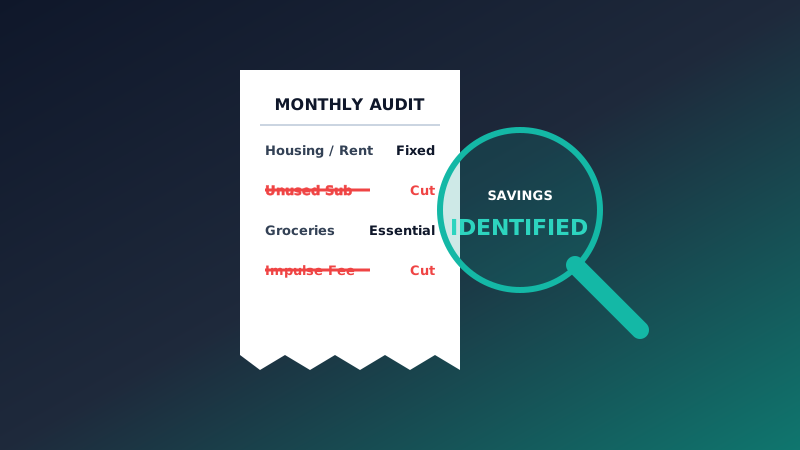
A monthly expense audit is a systematic financial review process used to track, evaluate, and optimize household cash flow. Over time, spending habits naturally experience "lifestyle creep"—the gradual accumulation of recurring subscriptions, convenience purchases, and unexamined bills that consume discretionary income.
Conducting a thorough quarterly or annual expense audit allows individuals to identify hidden financial leakage, eliminate unused recurring charges, renegotiate fixed service contracts, and reallocate capital toward meaningful financial goals.
Executive Summary: Expense Audit Strategy
- Audit Frequency: Conduct a comprehensive audit every 90 days or whenever major life changes occur.
- Time Horizon: Review bank and credit card statements covering the last 3 to 6 months.
- Categorization Rule: Group every transaction into one of three buckets: Mandatory Fixed, Variable Essential, or Discretionary.
- Target Outcome: Identify 10% to 15% in cash leakage to redirect into emergency reserves or retirement accounts.
Step-by-Step Expense Audit Process
                   90-DAY EXPENSE AUDIT FLOW CHART
┌──────────────────────────┐     ┌──────────────────────────┐     ┌──────────────────────────┐
│ Step 1: Gather 90 Days   │ ──► │ Step 2: Categorize Every │ ──► │ Step 3: Eliminate &      │
│ Statements (Bank/Credit) │     │ Line Item Transaction    │     │ Renegotiate Contracts    │
└──────────────────────────┘     └──────────────────────────┘     └──────────────────────────┘
Step 1: Gather Statements Across All Accounts
Download CSV or PDF statements covering the last 90 days from all financial accounts:
- Primary checking and savings accounts
- All personal and business credit cards
- Digital payment apps (PayPal, Venmo, Apple Pay)
Step 2: Categorize Every Line Item
Review transactions line by line and tag each expense:
| Expense Bucket | Definition | Examples | Action Plan |
|---|---|---|---|
| Pillar 1: Mandatory Fixed | Non-negotiable contractual costs | Rent/mortgage, insurance, auto loan | Negotiate rate / Audit coverage |
| Pillar 2: Variable Essential | Necessary living costs with flexible totals | Groceries, electricity, fuel | Optimize habits / Bulk shop |
| Pillar 3: Discretionary | Optional lifestyle choices | Dining, streaming, hobbies | Eliminate / Cap monthly limit |
Step 3: Identify "Financial Leakage"
Look specifically for three common categories of unintentional spending:
- Zombie Subscriptions: Recurring monthly fees for software, gym memberships, or streaming services you no longer use regularly.
- Convenience Multipliers: Frequent small purchases (e.g., daily $6 lattes or $15 food delivery service fees) that add up to hundreds of dollars monthly.
- Outdated Contract Rates: Auto insurance, internet, or mobile phone plans that have quietly increased over time without a rate review.
Practical Case Study: $420 Monthly Cash Recovery
Consider a household that performs a thorough 90-day expense audit:
- Cancelled Unused Gym & App Subscriptions: -$65/month
- Switched Auto Insurance Provider (Same Coverage): -$90/month
- Renegotiated Internet Plan with Current Provider: -$35/month
- Capped Food Delivery Apps to Once per Month: -$180/month
- Replaced Premium Cable Package with Basic Streaming: -$50/month
- Total Monthly Cash Recovered: $420 per month ($5,040 annually)
By reallocating this recovered $420/month into a High-Yield Savings Account or Roth IRA, this household builds over $60,000 in wealth over 10 years (assuming a 7% average compounding return).
Practical Takeaway Checklist
- Export 90 days of bank and credit card statement transactions.
- Sort expenses into Mandatory Fixed, Variable Essential, and Discretionary.
- Cancel all recurring subscriptions not utilized in the last 30 days.
- Call auto insurance and internet providers to request updated rate quotes.
- Set up weekly automated balance alerts to monitor discretionary spending.
Sources
- Consumer Financial Protection Bureau (CFPB): Tracking Your Expenses Guide
https://www.consumerfinance.gov/consumer-tools/save/
Disclaimer
This educational material is provided for informational purposes only. Consult a certified financial planner for tailored personal advice.
The 30-Day Expense Audit Checklist
To conduct a thorough personal cash flow audit, follow a structured 30-day framework:
- Export 90 Days of Bank & Credit Card Statements: Download CSV files from primary checking and credit card accounts to capture quarterly recurring subscriptions and auto-renewing software services.
- Categorize Outflows into Fixed vs. Variable: Separate fixed obligations (rent/mortgage, utilities, insurance) from variable discretionary spending (dining, entertainment, shopping).
- Execute the Subscription Cancellation Sweep: Cancel unused streaming services, gym memberships, or app trials. Re-evaluate auto-pay recurring bills annually.
- Benchmark Savings Rate: Compare net monthly savings against long-term targets, establishing structured cash reserves in accounts covered in emergency fund amount explained.
Implementing the 50/30/20 Expense Audit
After categorizing monthly outflows, align spending against the 50/30/20 Budgeting Rule:
- 50% Needs: Essential obligations (housing, groceries, utilities, basic transportation, minimum debt payments).
- 30% Wants: Discretionary choices (dining out, entertainment, subscriptions, hobbies).
- 20% Savings & Debt Paydown: High-yield emergency reserves, retirement contributions, and aggressive debt reduction.
Expense Audit Implementation Rules
- Audit Cash Flows Quarterly: Re-assess monthly subscriptions and variable spending habits every 90 days.
- Automate Savings First: Transfer target savings to high-yield accounts on payday before budgeting discretionary spending.
Educational Summary & Key Definitions
Understanding financial fundamentals requires mastering core vocabulary and operational definitions:
- Principal: The original amount of money deposited or borrowed, excluding interest earnings or finance charges.
- Annual Percentage Yield (APY): The real rate of return earned on a deposit account, taking into account the effect of compounding interest over a 12-month period.
- Liquidity: The ease and speed with which an asset can be converted into liquid cash without incurring significant capital loss.
- Diversification: An investment risk management strategy that mixes a wide variety of investments within a portfolio to limit exposure to any single asset class.
Consulting official regulatory guidelines—such as disclosures from the CFPB, FDIC, NCUA, and Federal Reserve—ensures you make informed financial decisions backed by verified consumer protections.
Long-Term Financial Cash Flow Maintenance
Maintaining long-term control over monthly spending requires establishing regular financial review routines:
- Quarterly Spending Reviews: Conduct a comprehensive expense audit every 90 days to capture recurring quarterly or semi-annual auto-renewing subscriptions, domain renewals, and seasonal insurance payments.
- Annual Vendor Benchmark: Review annual service contracts (car insurance, home insurance, mobile phone plans, internet service) annually. Request competitive quotes from alternative providers to ensure you receive optimal pricing.
- Automate Savings First: Direct target savings and investment contributions into high-yield accounts on payday before allocating funds for variable discretionary spending.
Freelancers and gig workers can read our guide on budgeting on an irregular income.
MoneyTalkin' provides financial education, educational concepts, and general informational guides. Articles do not constitute personalized financial, investment, legal, or tax advice. Financial products, rates, terms, and regulatory rules change frequently; consult a qualified financial professional regarding your specific situation. Read our full Disclaimer Policy.
Written by MoneyTalkin'
MoneyTalkin' researches and publishes objective financial education content, money management fundamentals, and practical financial guides.
Related Technical Articles
Explore related topics in this cluster to deepen your understanding.