The Hidden Costs of Homeownership: Maintenance, Property Taxes & Fees
A practical guide on how to calculate the hidden costs of homeownership, including property taxes, home insurance, maintenance rules of thumb, HOA fees, and CapEx reserve planning.
The Hidden Costs of Homeownership: Maintenance, Property Taxes & Fees
Evaluating property affordability often focuses on down payments and monthly mortgage payments. However, the purchase price of a house represents only a portion of the total cost of owning a home.
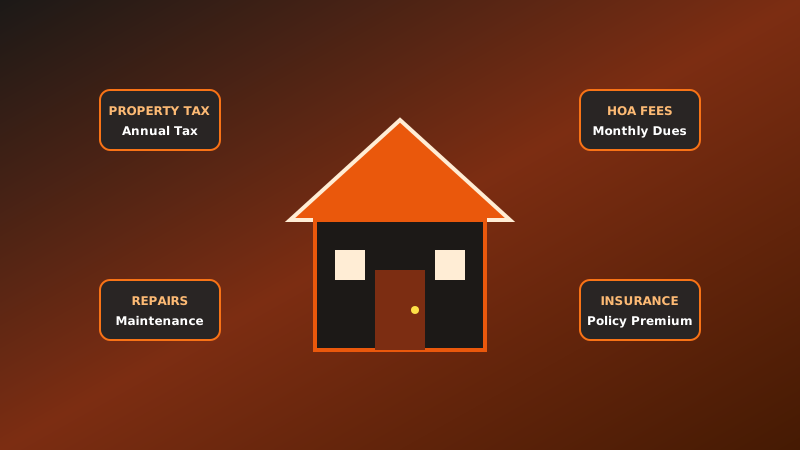
Real estate incurs substantial recurring operating expenses—the hidden costs of homeownership—that increase your ongoing monthly housing obligation. Understanding how to calculate the hidden costs of homeownership before buying ensures your budget remains resilient. Evaluating housing costs requires comparing ownership expenses against rental benchmarks in renting vs. buying a home. This guide uses U.S. homeownership, mortgage, property-tax, and insurance examples; rules and costs differ in other countries and jurisdictions.
Executive Summary: True Cost of Buying a House
- Beyond P&I: Principal and interest payments cover financing; property taxes, insurance, maintenance, utilities, and HOA dues constitute ongoing operating overhead.
- Maintenance Planning: The commonly cited 1%–4% rule serves as a planning framework, but actual costs depend on property age, climate, and condition.
- Capital Expenditures (CapEx): Major structural systems (roofs, HVAC, plumbing) require long-term reserve planning rather than relying on annual maintenance funds.
- Uncovered Risks: Standard insurance policies exclude specific perils such as flooding or sewer backups, requiring supplemental coverage based on location.
- Pre-Purchase Due Diligence: Reviewing HOA reserves, municipal tax rules, and utility histories prevents post-closing financial strain.
1. Property Taxes and Homeowners Insurance
Property taxes and homeowners insurance constitute major recurring non-mortgage housing expenses for property owners.
Property Taxes
Property taxes are levied by local governments and school districts to fund infrastructure and services. Tax obligations vary substantially based on property valuation, local tax rates, and jurisdiction rules.
- Tax Reassessment: In many jurisdictions, tax assessments update following a sale. A home assessed at an older valuation may be reassessed near the new purchase price, increasing tax bills. Buyers should verify local assessment rules.
Homeowners Insurance
Hazard insurance protects the structure and personal property against specified risks like fire or theft. Premiums depend on property age, building materials, coverage, deductibles, and weather risks. Lenders require continuous insurance coverage as a mortgage condition.
2. Maintenance Budget: The 1%–4% Rule of Thumb
The home maintenance costs 1%–4% rule of thumb suggests setting aside 1% to 4% of a property's value annually for repairs.
This rule is a planning framework rather than a guaranteed cost estimate. Actual maintenance requirements vary based on property characteristics:
- Age & Condition: Older homes generally require higher ongoing maintenance than new construction.
- Climate Exposure: Regions experiencing freezing winters or high humidity face accelerated exterior wear.
- System Condition: Properties with deferred maintenance require higher initial outlays.
- Labor & Material Costs: Regional contractor rates and material prices influence repair expenses.
Building a dedicated reserve fund for routine repairs prevents turning maintenance issues into high-interest debt, complementing an emergency fund blueprint.
3. HOA Fees, Reserve Funds, and Special Assessments
Properties located within Homeowners Associations (HOAs) or condominiums carry mandatory association dues.
Regular Dues & Coverage
HOA fees cover community maintenance, landscaping, building repairs, and common amenities. Coverage varies by community association agreements.
Reserve Funds & Special Assessments
A portion of HOA dues should flow into a capital reserve fund for community repairs. If an association maintains inadequate reserves, the board may levy a mandatory special assessment—demanding lump-sum contributions from owners.
Buyers should review HOA financial statements, reserve studies, meeting minutes, and assessment histories. Disclosure requirements vary by state and local jurisdiction.
4. Capital Expenditure Reserve Planning
While routine maintenance addresses minor issues, major property components eventually reach the end of their functional lifespans. Planning for these major replacements is known as Capital Expenditure (CapEx) reserve planning.
Major systems requiring long-term reserve planning include:
- Roofing Systems: Shingle, tile, or flat roofs.
- HVAC Systems: Heating units, heat pumps, and air conditioners.
- Water Heaters: Standard tank or tankless units.
- Plumbing & Electrical: Supply lines, sewer laterals, and electrical panels.
- Exterior Features: Siding, decking, and masonry.
Useful lifespans and replacement expenses vary based on material quality, installation, maintenance, climate exposure, and manufacturer specifications. Rather than treating these as unexpected emergencies, establish a structured reserve using a sinking fund framework to save incrementally.
5. Utilities and Other Recurring Ownership Costs
Transitioning from renting to owning often introduces expanded utility obligations previously paid by landlords.
Common recurring homeownership expenses include:
- Energy & Fuel: Electricity, gas, or heating oil, scaling with home size and insulation.
- Water & Sewer: Municipal water consumption and sewer charges.
- Waste Services: Trash collection and recycling fees.
- Property Upkeep: Lawn care, tree trimming, and pest control.
- Service Contracts: Alarm monitoring fees or HVAC service agreements.
Utility obligations fluctuate seasonally and vary based on municipal rates and household consumption.
6. Supplemental Insurance and Uncovered Perils
Standard homeowners insurance policies do not cover every natural peril.
Excluded Hazards
Standard policies generally exclude damage from flooding, earthquakes, landslides, and sewer backups.
- Flood Insurance: According to Federal Emergency Management Agency (FEMA) guidelines, properties in designated flood zones may require separate flood insurance through the National Flood Insurance Program (NFIP) or private insurers.
- Policy Endorsements: Coverage endorsements—such as sewer backup riders—can often be added for an additional premium.
The National Association of Insurance Commissioners (NAIC) recommends reviewing policy exclusions, coverage limits, deductibles, and endorsement terms with an insurance professional.
7. Hypothetical Annual Ownership-Cost Example
To demonstrate how to calculate the hidden costs of homeownership, consider a hypothetical property valued at $400,000.
Note: Figures below are illustrative rounded numbers demonstrating potential categories, not representative of national averages or guaranteed costs.
| Expense Category | Hypothetical Monthly Estimate | Hypothetical Annual Total |
|---|---|---|
| Property Taxes (Illustrative municipal rate) | $400 | $4,800 |
| Homeowners Insurance (Base coverage) | $150 | $1,800 |
| Maintenance Reserve (1.5% annual baseline) | $500 | $6,000 |
| HOA Dues (Community fee) | $200 | $2,400 |
| Utilities & Trash (Water, gas, electric, waste) | $350 | $4,200 |
| CapEx Reserve (Long-term major repairs) | $200 | $2,400 |
| HYPOTHETICAL TOTAL OVERHEAD | $1,800 / month | $21,600 / year |
In this scenario, non-mortgage operating costs equal $1,800 per month in addition to principal and interest payments. Allocating these funds can be managed using frameworks like the 50/30/20 budgeting rule.
8. Pre-Purchase Hidden-Cost Checklist
Complete this pre-purchase checklist before making an offer:
- Request Historical Utility Bills: Ask for 12 months of utility statements to gauge seasonal energy and water expenses.
- Obtain Insurance Quotes: Secure quotes from multiple providers rather than relying on online estimates.
- Verify Property Tax Reassessment Rules: Contact local tax assessors to estimate post-sale tax adjustments.
- Review HOA Reserve Studies: Inspect HOA balance sheets, reserve health, meeting minutes, and assessment history.
- Inspect Major System Ages: Determine the age and condition of the roof, HVAC, water heater, and electrical panel.
- Evaluate Supplemental Insurance Needs: Check FEMA flood maps to determine if flood insurance is recommended.
- Calculate CapEx Allocations: Estimate remaining useful lives for major components to calculate monthly reserve needs.
- Budget for Immediate Repairs: Account for items flagged in home inspection reports requiring short-term attention.
- Confirm Closing Costs: Ensure cash reserves cover 2% to 5% in closing fees alongside down payment funds.
Sources
- Consumer Financial Protection Bureau (CFPB): Owning a Home: Key Expenses & Guidance
https://www.consumerfinance.gov/owning-a-home/ - Federal Emergency Management Agency (FEMA): National Flood Insurance Program Guidance
https://www.fema.gov/flood-insurance - National Association of Insurance Commissioners (NAIC): Homeowners Policy Guide
https://content.naic.org/
Disclaimer
Educational content only. Property taxes, insurance terms, maintenance costs, HOA regulations, and municipal rules vary significantly by location, property type, and jurisdiction. Consult a qualified real estate professional, insurance agent, CPA, or financial advisor for personalized guidance.
MoneyTalkin' provides financial education, educational concepts, and general informational guides. Articles do not constitute personalized financial, investment, legal, or tax advice. Financial products, rates, terms, and regulatory rules change frequently; consult a qualified financial professional regarding your specific situation. Read our full Disclaimer Policy.
Written by MoneyTalkin'
MoneyTalkin' researches and publishes objective financial education content, money management fundamentals, and practical financial guides.
Related Technical Articles
Explore related topics in this cluster to deepen your understanding.