What Is a Sinking Fund? How to Save for Big Expenses
Detailed financial analysis and educational guide on What Is a Sinking Fund? How to Save for Big Expenses.
What Is a Sinking Fund? How to Save for Planned Future Expenses
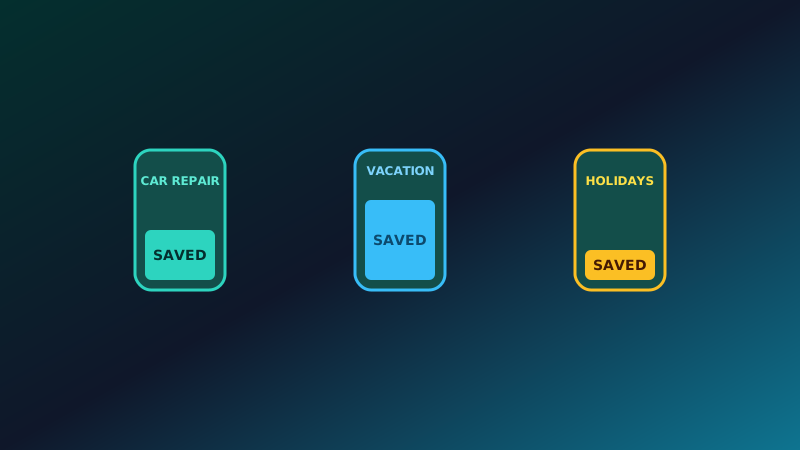
A sinking fund is a strategic savings method where money is set aside in small, regular increments over time to pay for a specific, known future expense. Unlike an emergency fund—which protects against unexpected crises—a sinking fund is used for predictable, planned non-recurring expenses.
Common uses for sinking funds include annual car insurance premiums, home maintenance, holiday gift shopping, upcoming vacations, or expected vehicle replacements. By building sinking funds into your monthly budget, you eliminate the stress of large annual bills and prevent debt accumulation.
Executive Summary: Sinking Fund Overview
- Core Concept: Saving a small fixed amount monthly for a specific future purchase or predictable annual bill.
- Sinking Fund vs. Emergency Fund: Sinking funds are for known, expected costs; emergency funds are for unknown, sudden crises.
- Primary Benefit: Smooths out irregular cash flow demands, eliminating monthly budget spikes.
- Storage Recommendation: High-Yield Savings Accounts (HYSA) sub-accounts or dedicated savings buckets.
Sinking Fund vs. Emergency Fund: Key Differences
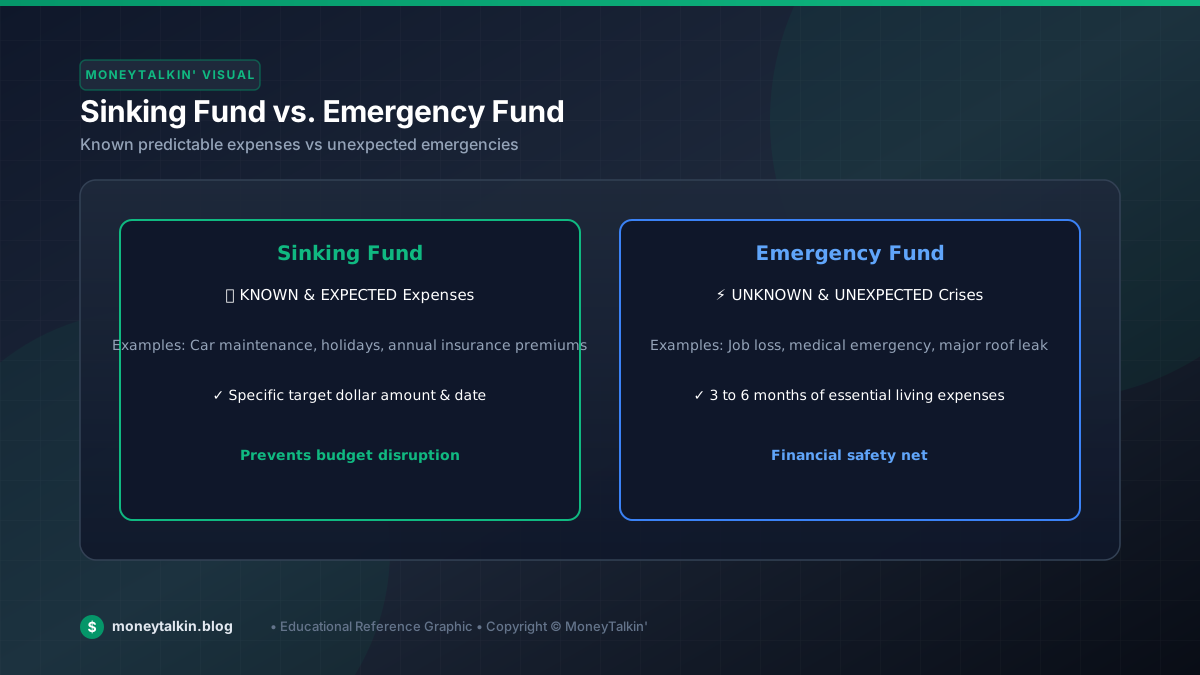
Understanding the structural distinction between these two cash reserves prevents budget misallocations:
| Attribute | Sinking Fund | Emergency Fund |
|---|---|---|
| Purpose | Planned, predictable future expenses | Unplanned, unexpected crises |
| Expense Timing | Known future date (e.g., 6 months, 1 year) | Unknown / Sudden timing |
| Likelihood of Use | 100% certainty money will be spent | Conditional (used only if crisis occurs) |
| Examples | Annual car insurance, vacation, home repairs | Sudden job loss, emergency medical bills |
How to Set Up and Calculate a Sinking Fund
Calculating monthly sinking fund contributions requires three simple data points:
- Target Dollar Amount ($A$)
- Number of Months Until Expense ($M$)
- Monthly Savings Target ($A / M$)
                     SINKING FUND CALCULATION FLOW
┌───────────────────────────┐     ┌───────────────────────────┐     ┌───────────────────────────┐
│ Target Expense Amount     │  ÷  │ Months Until Payment Due  │  =  │ Monthly Budgeted Deposit  │
│ Annual Insurance ($1,200) │     │ 12 Months                 │     │ $100 / Month              │
└───────────────────────────┘     └───────────────────────────┘     └───────────────────────────┘
Real-World Example: Multi-Category Sinking Fund Budget
Consider a household planning for three known upcoming expenses over the next 12 months:
- Annual Auto Insurance Premium: $1,200 due in 12 months.
$$\text{Monthly Contribution} = \frac{$1,200}{12} = \mathbf{$100/\text{month}}$$ - Holiday Shopping & Travel: $900 due in 6 months.
$$\text{Monthly Contribution} = \frac{$900}{6} = \mathbf{$150/\text{month}}$$ - Routine Home Maintenance Reserve: $2,400 target over 12 months.
$$\text{Monthly Contribution} = \frac{$2,400}{12} = \mathbf{$200/\text{month}}$$
Total Monthly Sinking Fund Allocation: $$100 + $150 + $200 = \mathbf{$450/\text{month}}$.
By depositing $450 into dedicated sinking fund buckets each month, this household pays cash for every expense when due, without straining their monthly checking account balance.
Popular Categories for Sinking Funds
- Property & Vehicle Expenses: Annual auto insurance, routine oil changes and tires, property taxes, home repair fund.
- Life Events & Travel: Annual vacations, weddings, milestone birthday celebrations, holiday gifting.
- Education & Technology: Annual software subscriptions, tuition fees, laptop/phone replacement reserve.
Practical Takeaway Checklist
- Review bank statements to identify all non-monthly recurring bills.
- Determine total cost and target due dates for each item.
- Divide total costs by remaining months to establish monthly savings requirements.
- Open dedicated HYSA sub-accounts or sub-buckets for each goal.
- Automate monthly transfers into your sinking funds on payday.
Sources
- Consumer Financial Protection Bureau (CFPB): Managing Savings & Budget Categories
https://www.consumerfinance.gov/consumer-tools/save/
Disclaimer
This educational guide is provided for informational purposes only. Consult a qualified professional for tailored personal financial advice.
Sinking Funds vs. Emergency Funds
While both tools involve holding liquid cash, sinking funds and emergency funds serve distinct financial purposes:
| Cash Reserve Tool | Primary Purpose | Examples |
|---|---|---|
| Emergency Fund | Unplanned emergency expense protection | Unexpected job loss, medical emergency, sudden roof leak |
| Sinking Fund | Planned future expense accumulation | Annual car insurance, holiday gifts, home painting, vacation |
Practical Sinking Fund Structure
Establish dedicated sub-accounts or high-yield savings allocations for recurring annual expenses. Divide target annual cost by 12 months (e.g., $1,200 annual auto insurance / 12 = $100 monthly sinking fund transfer) to eliminate expense volatility. Compare reserve structures in emergency fund amount explained.
Sinking Fund Account Setup Strategy
To organize sinking funds without cluttering primary checking accounts:
- Utilize Sub-Accounts: Select online banks that permit creating multiple sub-savings accounts under one master login (e.g., "Auto Repair", "Annual Taxes", "Vacation").
- Automate Bi-Weekly Transfers: Set automatic recurring transfers on payday to fund each sinking envelope systematically.
Key Rules for Sinking Fund Management
- Separate Sinking Funds from Emergency Reserves: Keep sinking funds dedicated to planned expenses distinct from 3-6 month emergency buffers.
- Automate Transfers: Set up automatic monthly transfers to fund recurring annual obligations.
Educational Summary & Key Definitions
Understanding financial fundamentals requires mastering core vocabulary and operational definitions:
- Principal: The original amount of money deposited or borrowed, excluding interest earnings or finance charges.
- Annual Percentage Yield (APY): The real rate of return earned on a deposit account, taking into account the effect of compounding interest over a 12-month period.
- Liquidity: The ease and speed with which an asset can be converted into liquid cash without incurring significant capital loss.
- Diversification: An investment risk management strategy that mixes a wide variety of investments within a portfolio to limit exposure to any single asset class.
Consulting official regulatory guidelines—such as disclosures from the CFPB, FDIC, NCUA, and Federal Reserve—ensures you make informed financial decisions backed by verified consumer protections.
Practical Sinking Fund Examples & Monthly Math
To set up sinking funds for common recurring household expenses, calculate exact monthly savings allocations:
| Sinking Fund Purpose | Target Annual Cost ($) | Target Month | Required Monthly Savings ($) |
|---|---|---|---|
| Auto Insurance Premium | $1,440 | Month 12 | $120 / month |
| Holiday & Gift Expenses | $960 | Month 12 | $80 / month |
| Annual Property Maintenance | $2,400 | Month 12 | $200 / month |
| Total Monthly Allocation | $4,800 | -- | $400 / month |
Automating these transfers into dedicated high-yield savings sub-accounts ensures cash is available when annual bills come due.
To pair sinking funds with zero-sum planning, see our guide on Zero-Based Budgeting.
MoneyTalkin' provides financial education, educational concepts, and general informational guides. Articles do not constitute personalized financial, investment, legal, or tax advice. Financial products, rates, terms, and regulatory rules change frequently; consult a qualified financial professional regarding your specific situation. Read our full Disclaimer Policy.
Written by MoneyTalkin'
MoneyTalkin' researches and publishes objective financial education content, money management fundamentals, and practical financial guides.
Related Technical Articles
Explore related topics in this cluster to deepen your understanding.