Crypto Wallets Explained: Hot Wallets, Cold Wallets, and Custody
A complete educational guide explaining what crypto wallets store, public keys, private keys, seed phrases, hot vs cold storage, and self-custody risks.
Crypto Wallets Explained: Hot Wallets, Cold Wallets, and Custody
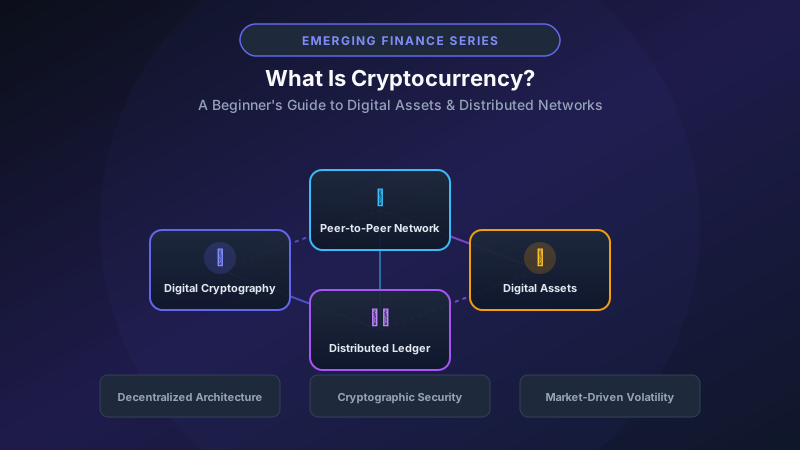
A common misconception among beginners exploring what-is-cryptocurrency is that a digital wallet holds physical or digital coins inside a smartphone app or hardware device. In reality, cryptocurrency tokens reside permanently on public what-is-blockchain ledgers.
A crypto wallet is a software tool or physical hardware device that stores cryptographic keys—specifically public addresses and private keys—enabling users to view balances, sign transactions, and manage asset access securely.
1. How Crypto Wallets Work: Public Keys, Private Keys & Seed Phrases
Crypto wallet security rests on three interrelated cryptographic concepts:
Seed Phrase (12/24 Master Words) ──► Private Key (Secret Signing Key) ──► Public Address (Receiving Code)
1. Public Address (The Account Number)
Derived from your public key, this is an alphanumeric string shared openly with others to receive funds. It functions similarly to an IBAN or bank routing number.
2. Private Key (The Digital Signature Password)
A secret 256-bit cryptographic number paired mathematically with your public address. Your private key signs outbound transactions, proving ownership of funds on the blockchain without revealing the key itself.
3. Seed Phrase / Recovery Phrase (The Master Backup)
A standard list of 12 or 24 plain-language words (governed by the BIP-39 standard) generated when creating a new wallet. The seed phrase mathematically regenerates all private keys and public addresses associated with that wallet across compatible software or hardware devices.
2. Custodial vs. Self-Custody Wallets
The digital asset industry distinguishes between two fundamental custody models:
                            ┌── Custodial (Third-Party Holds Keys)
                            │   • Centralized Exchanges / Custodians
                            │   • Account Recovery Support Available
Custody Architecture Model ─┤
                            └── Self-Custody (User Holds Keys)
                                • Hardware & Software Self-Custody
                                • Total Control & Zero Third-Party Recovery
| Custody Type | Key Ownership | Primary Advantage | Main Risk Factor |
|---|---|---|---|
| Custodial (Exchange Account) | Third party holds private keys. | Easy setup; password recovery via support. | Exchange insolvency, withdrawal freezes, hacking. |
| Self-Custody (User-Controlled) | User holds private keys & seed phrase. | Total censorship-resistant control. | Permanent loss if seed phrase is lost or stolen. |
3. Hot Wallets vs. Cold Wallets: Comparing Storage Types
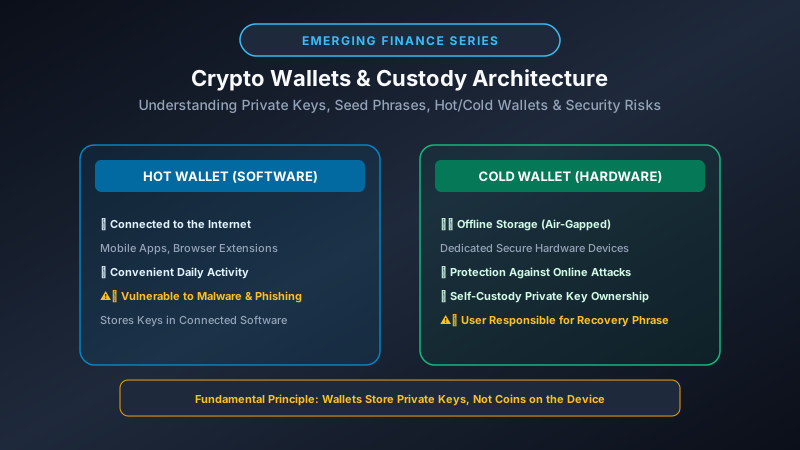
Self-custody wallets are categorized into hot wallets and cold wallets based on their internet connectivity:
Hot Wallet (Connected to Internet)  ◄────────►  Cold Wallet (Air-Gapped Offline Device)
  • Mobile Apps, Web Extension Wallets            • Hardware Devices, Offline Paper Backups
  • Fast Daily Transactions & Web3 Access          • Maximum Security Against Online Malware
Hot Wallets (Internet-Connected Software)
- Form Factors: Mobile apps, desktop applications, or web browser extensions.
- Pros: Convenient for daily transactions, interactive Web3 protocols, and rapid token swaps.
- Cons: Private keys are stored on devices connected to the internet, making them susceptible to malware, keyloggers, and malicious smart contract approvals.
Cold Wallets (Offline Hardware Storage)
- Form Factors: Specialized physical USB/Bluetooth hardware devices or air-gapped paper key backups.
- Pros: Private keys remain isolated inside a secure enclave component that never connects directly to the internet. Transactions are signed offline inside the device before being broadcast.
- Cons: Requires purchasing hardware, physical storage safeguards, and extra operational steps for every transfer.
4. Critical Security Risks and Best Practices
Self-custody transfers total operational security responsibility to the individual. Consumers must recognize common security vulnerabilities:
              ┌── Seed Phrase Phishing (Fake Web Forms & Fake Support DMs)
              │
Security Risk ┼── Malicious Smart Contract Approvals (DApp Draining)
              │
              └── Unbacked Digital Storage (Screenshots or Cloud Notes containing Seed Words)
- Never Share Seed Phrases: Legitimate wallet developers, customer support reps, and exchange employees will never ask for your 12 or 24-word seed phrase. Anyone asking for your seed words is attempting a scam. Review fraud prevention tactics in common-cryptocurrency-scams.
- Avoid Digital Seed Copies: Storing seed phrases in unencrypted cloud notes, email drafts, or smartphone screenshots exposes them to digital theft if your account or cloud storage is compromised.
- Verify Transaction Details: Always verify the recipient address and network selection before confirming transactions, as crypto transfers are cryptographically permanent and irreversible. See how-cryptocurrency-transactions-work.
5. Key Takeaways
- Crypto wallets do not store coins; they store private keys that authorize ledger transactions.
- Custodial platforms hold keys for you, while self-custody wallets give you total control and responsibility.
- Hot wallets are internet-connected software apps; cold wallets are offline hardware devices.
- Your seed phrase is your master backup. Never type your seed phrase into an unverified website or share it with anyone.
6. Frequently Asked Questions
What happens if I break or lose my hardware wallet device?
If your hardware wallet is broken, stolen, or lost, your assets remain safe on the blockchain provided you have your 12 or 24-word seed phrase backed up offline. You can input that seed phrase into a replacement hardware or software wallet to restore full access.
Are crypto wallets covered by bank insurance?
No. Neither hot nor cold self-custody wallets are protected by FDIC, FSCS, or sovereign deposit insurance. Compare wallet legal protections with commercial bank deposits in stablecoins-vs-bank-deposits.
Educational Disclaimer
This article is provided for educational and security awareness purposes only. MoneyTalkin' does not endorse or recommend specific wallet manufacturers, software providers, or exchange platforms. Managing private keys carries financial and operational risk. Always conduct thorough independent research.
MoneyTalkin' provides financial education, educational concepts, and general informational guides. Articles do not constitute personalized financial, investment, legal, or tax advice. Financial products, rates, terms, and regulatory rules change frequently; consult a qualified financial professional regarding your specific situation. Read our full Disclaimer Policy.
Written by MoneyTalkin'
MoneyTalkin' researches and publishes objective financial education content, money management fundamentals, and practical financial guides.
Related Technical Articles
Explore related topics in this cluster to deepen your understanding.