Gold and Inflation: Why Gold Prices Can Rise Even When Interest Rates Are High
Gold is widely viewed as an inflation hedge, but its price behavior is complex. Understand how real interest rates, dollar strength, and central bank demand drive gold.
Gold and Inflation: Why Gold Prices Can Rise Even When Interest Rates Are High
Gold has maintained a unique status in human financial history as a store of value, monetary asset, and global reserve commodity. Popular commentary frequently characterizes gold as a simple, reliable hedge against inflation—suggesting that whenever consumer prices rise, gold spot prices must automatically follow.
However, real-world precious metals markets demonstrate far more complex price behavior. As evidenced by global commodity pricing data as of September 2026, gold prices can experience significant rallies during periods of high nominal interest rates, while stagnating during certain inflationary cycles. Understanding how gold interacts with real interest rates, currency movements, opportunity costs, central bank demand, and vehicle structures clarifies its true role in global financial markets.
1. The Inflation-Hedge Narrative vs. Historical Reality
The core premise of the inflation-hedge argument is straightforward: because fiat currencies can be expanded by central banks, their purchasing power declines over time during inflation. Gold, having a finite physical supply, cannot be printed, allowing it to preserve real purchasing power across extended multi-decade horizons.
Fiat Currency Expansion ──► Inflation (Loss of Purchasing Power) ──► Demand for Finite Real Assets (Gold)
Why Gold Does Not Move Mechanically With CPI
While gold has historically preserved purchasing power over multi-century periods, its short-to-medium-term price movements frequently disconnect from monthly Consumer Price Index (CPI) releases.
- Gold Pays No Yield: Gold bullion produces no cash flow, dividends, or interest payments.
- Holding Costs: Storing physical gold incurs custody, insurance, vaulting, and dealer transaction fees.
- Opportunity Cost: When yields on safe liquid cash assets—such as High-Yield Savings Accounts or Treasury Bills—are high, holding non-yielding gold carries a higher financial opportunity cost.
Understanding broader purchasing power erosion, as covered in inflation and purchasing power explained, illustrates why investors evaluate multiple asset classes during inflationary environments.
2. Real Interest Rates: The Primary Driver of Gold Prices
The single most influential financial metric governing gold prices is the real interest rate.
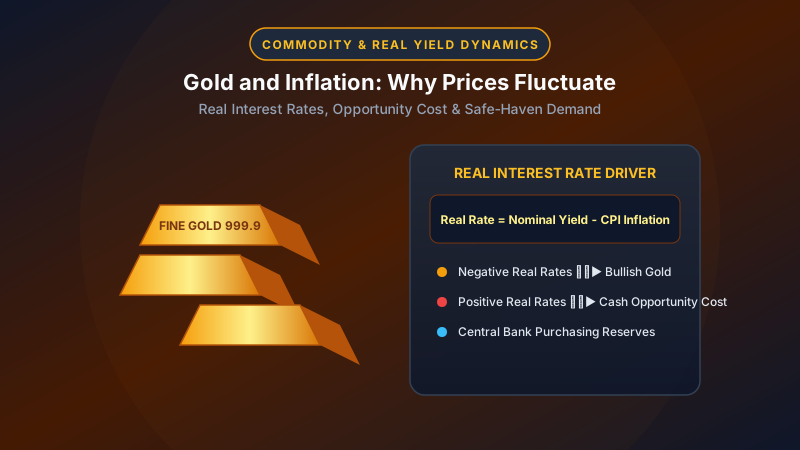
Real Interest Rate = Nominal Benchmark Interest Rate - Expected Inflation Rate
- Nominal Rate: The stated yield on risk-free debt securities (such as 10-year Treasury notes).
- Expected Inflation: The market's projected annual rate of inflation over the bond's term.
Real Rates Negative/Low  ──► Low Opportunity Cost ──► Bullish Environment for Gold
Real Rates Positive/High ──► High Opportunity Cost ──► Bearish Pressure on Gold
Why Real Rates Matter to Precious Metals
- Negative Real Rates: If nominal Treasury yields are 4.00% but inflation is running at 5.50%, the real interest rate is -1.50%. Fixed-income investors lose real purchasing power holding cash or bonds. In this environment, gold becomes highly attractive because its 0% yield outperforms a negative real yield on bonds.
- Positive Real Rates: If nominal yields are 6.00% and inflation falls to 2.50%, the real interest rate is +3.50%. Investors can earn a guaranteed positive real return in Treasuries, increasing the opportunity cost of holding non-yielding gold and exerting downward pressure on gold prices.
However, if real rates remain low—or if investors anticipate future central bank rate cuts—gold can rally strongly even while nominal interest rates appear high.
3. Secondary Drivers: Dollar Index, Geopolitics & Central Bank Purchasing
Beyond real interest rates, three major structural forces influence global gold prices:
| Market Factor | Transmission Mechanism | Gold Price Impact |
|---|---|---|
| U.S. Dollar Strength (DXY) | Gold is priced globally in U.S. Dollars | Strong Dollar makes gold more expensive in foreign currencies (drag on price) |
| Central Bank Purchases | Sovereign central banks buy physical gold reserves | Sustained institutional demand creates structural price support |
| Geopolitical Risk | Unforeseen conflict or market turmoil triggers safe-haven demand | Flight-to-safety buying drives short-term price spikes |
Central Bank Reserve Diversification
In recent years, official sector data from the World Gold Council confirms that international central banks have accumulated physical gold at historic rates. Sovereign institutions diversify reserves away from single-fiat currency reliance to reduce counterparty risk and enhance national balance sheet resilience.
Safe-Haven Asset Dynamics
During periods of severe systemic financial distress or geopolitical conflict, investor demand for non-counterparty assets increases. Physical gold carries no credit risk and cannot be defaulted on by a corporate or sovereign issuer, reinforcing its role as a crisis reserve asset.
4. Vehicle Structures: Physical Bullion vs. ETFs vs. Mining Stocks
Investors evaluating gold exposure can choose between distinct vehicle structures:
- Physical Bullion (Coins & Bars): Provides direct ownership with zero counterparty risk. However, physical gold incurs dealer markups, shipping fees, storage expenses, and insurance costs. Furthermore, physical gold sales are subject to IRS collectible tax rates (up to 28% maximum rate).
- Gold ETFs (Exchange-Traded Funds): Physically backed ETFs trade liquidly inside brokerage accounts, providing spot price exposure without physical custody burdens. Compare brokerage account structures in our guide to taxable brokerage account explained.
- Gold Mining Stocks: Shares of gold mining corporations provide leveraged exposure to gold prices. Mining companies earn operational cash flows and pay dividends, but introduce corporate execution risk, mining cost inflation, and equity market volatility.
5. Gold Compared to Other Inflation-Hedging Assets
Investors seeking to insulate portfolios from purchasing power loss evaluate several asset categories:
- TIPS (Treasury Inflation-Protected Securities): U.S. government bonds whose principal value adjusts directly with changes in the Consumer Price Index. Unlike gold, TIPS pay coupon interest and offer direct, contractual inflation adjustment.
- Equities: Stocks represent partial ownership of operating businesses that can raise prices for goods and services during inflation.
- Commodities: Broad raw materials (energy, metals, agriculture) respond directly to immediate supply-demand imbalances, though they exhibit high price volatility.
6. Common Misconceptions About Gold Investing
When evaluating media claims regarding precious metals, consumers should distinguish documented financial relationships from marketing claims:
- Myth: Gold always rises when inflation rises. False. If the central bank raises nominal interest rates aggressively above the inflation rate, real rates rise, which can cause gold prices to fall despite elevated inflation.
- Myth: Gold is a high-growth wealth building asset. False. Over long historical horizons, broad equity indexes (such as the S&P 500) have generated substantially higher real compound annual growth rates than gold bullion.
- Myth: Gold provides guaranteed downside protection. False. Gold prices experience significant cyclical drawdowns and multi-year stagnation periods.
7. Gold Investment Vehicle Comparison & Tax Rules
When evaluating gold for portfolio diversification, investors encounter distinct vehicle structures:
- Physical Bullion (Coins & Bars): Provides direct ownership with zero counterparty risk. However, physical gold incurs dealer markups, shipping fees, storage expenses, and insurance costs. Furthermore, physical gold sales are subject to IRS collectible tax rates (up to 28% maximum rate).
- Gold ETFs (Exchange-Traded Funds): Physically backed ETFs trade liquidly inside brokerage accounts, providing spot price exposure without physical custody burdens. Compare brokerage account structures in our guide to taxable brokerage account explained.
- Gold Mining Stocks: Shares of gold mining corporations provide leveraged exposure to gold prices. Mining companies earn operational cash flows and pay dividends, but introduce corporate execution risk, mining cost inflation, and equity market volatility.
Understanding tax obligations on collectibles ensures you calculate net returns accurately after liquidity events.
Summary Principles
- Focus on Real Rates: Track the yield on Treasury Inflation-Protected Securities (TIPS) or real interest rates rather than headline nominal rates alone.
- Evaluate Opportunity Cost: Recognize that high liquid yields on products like treasury bills t-bills explained increase the cost of holding physical gold.
- Maintain Educational Perspective: Treat gold as a specialized portfolio diversification asset rather than a speculative wealth-generation vehicle or guaranteed short-term hedge.
MoneyTalkin' provides financial education, educational concepts, and general informational guides. Articles do not constitute personalized financial, investment, legal, or tax advice. Financial products, rates, terms, and regulatory rules change frequently; consult a qualified financial professional regarding your specific situation. Read our full Disclaimer Policy.
Written by MoneyTalkin'
MoneyTalkin' researches and publishes objective financial education content, money management fundamentals, and practical financial guides.
Related Technical Articles
Explore related topics in this cluster to deepen your understanding.