The GameStop Saga, Years Later: What Actually Changed in Market Structure
An objective analysis of the 2021 GameStop market event, examining short interest mechanics, clearing house collateral spikes, SEC findings, T+1 settlement, and lasting regulatory changes.
The GameStop Saga, Years Later: What Actually Changed in Market Structure
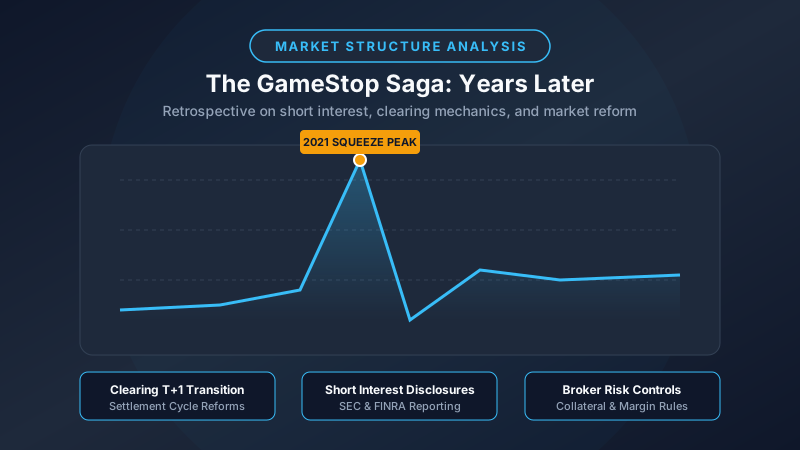
In January 2021, a rapid surge in retail trading activity centered around GameStop Corp. (NYSE: GME) captured global attention. Driven by online discussions, high short interest, and commission-free retail trading applications, GameStop’s share price rose from under $20 to an intraday high of $483 within weeks.
The event exposed operational friction points within the United States equity clearing and settlement system. In response, retail brokerages temporarily restricted buy orders for GameStop and other volatile stocks, igniting intense debate among market participants, regulators, and legislators.
Years later, official government reviews—most notably the Securities and Exchange Commission (SEC) Staff Report on Equity and Options Market Structure Conditions in Early 2021—and subsequent regulatory reforms have clarified what actually happened behind the scenes. This article examines the mechanics of the event, the underlying infrastructure bottlenecks, and the regulatory changes that resulted.
1. The Anatomy of the 2021 GameStop Event
To understand the 2021 episode, it is necessary to examine the convergence of three distinct financial mechanics: extreme short interest, retail call option buying, and commission-free order routing.
Extreme Short Interest
Heading into late 2020, institutional short interest in GameStop exceeded 100% of the company’s publicly available share float. Short selling involves borrowing shares to sell them on the open market, intending to buy them back later at a lower price. When short interest exceeds total float, any upward price pressure forces short sellers to buy shares to cover their positions, creating a self-reinforcing upward spiral known as a short squeeze.
The "Gamma Squeeze" Factor
Retail investors purchased large volumes of out-of-the-money call options. When market makers sell call options, they typically hedge their exposure by buying the underlying stock. As the stock price rises, market makers must buy progressively more shares to maintain a delta-neutral position. This dynamic—known as a gamma squeeze—added substantial buying pressure alongside spot stock purchases.
Commission-Free Trading Accessibility
The widespread adoption of zero-commission mobile brokerages allowed millions of retail investors to enter orders instantaneously, coordinating sentiment across online forums like Reddit’s r/wallstreetbets.
High Short Interest + Retail Option Delta Hedging + Social Coordination = Liquidity Crunch
2. Why Retail Brokers Restricted Buying: The Clearing House Reality
On January 28, 2021, several prominent brokerages—including Robinhood, Interactive Brokers, and Webull—temporarily halted buy orders for GameStop and select other securities, allowing customers only to sell existing shares.
While public speculation initially attributed the restrictions to institutional collusion, subsequent regulatory investigations revealed that the core driver was a clearing house collateral bottleneck.
How Stock Clearing Works (T+2 at the Time)
In 2021, U.S. stock trades settled on a T+2 basis (two business days after trade execution). Between trade execution and final settlement, the National Securities Clearing Corporation (NSCC)—a subsidiary of the Depository Trust & Clearing Corporation (DTCC)—acts as the central counterparty guaranteeing trade completion.
To protect the clearing system against broker default, the NSCC requires brokerages to post daily clearing fund deposits (margin collateral). The required deposit formula factors in volatility and clearing risk.
The Value-at-Risk (VaR) Margin Call Spike
On the morning of January 28, extreme intraday volatility caused the NSCC's aggregated margin requirement for participating brokers to increase dramatically:
- Robinhood’s Clearing Fund Obligation: On January 28, the NSCC issued a clearing fund deposit call to Robinhood for $3.7 billion—a massive increase driven by special Value-at-Risk (VaR) charges.
- Capital Buffer Constraints: Because Robinhood did not have sufficient liquid collateral immediately available to meet the $3.7 billion demand, the NSCC granted a waiver after Robinhood restricted buy orders on high-volatility stocks, thereby reducing short-term clearing exposure.
The restriction was an operational decision driven by clearing house margin rules, not an arbitrary choice by retail platforms to protect short sellers.
3. What Official SEC Investigations Concluded
In October 2021, the SEC published its comprehensive 44-page staff report analyzing the event. Key factual findings included:
- Short Covering Was Not the Sole Price Driver: While short sellers did buy shares to cover positions, the SEC found that the primary driver of GameStop's price increase was positive retail purchasing volume of spot equity.
- Payment for Order Flow (PFOF) Incentives: The report noted that wholesale market makers execute a large percentage of retail orders under PFOF arrangements, highlighting potential conflicts of interest regarding order execution quality.
- Market Resilience Under Stress: Despite extreme volume and settlement stress, core market infrastructure remained operational without systemic default.
4. Key Reforms Implemented Since the Event
The GameStop episode accelerated significant structural changes across U.S. equity markets:
1. Transition to T+1 Settlement (May 2024)
The most far-reaching structural change was shorten the standard U.S. settlement cycle from T+2 to T+1 (one business day after trade execution), which officially took effect in May 2024:
- Reduced Settlement Exposure: Halving the settlement window reduces open trade duration by 50%, significantly lowering clearing house collateral requirements during periods of high market volatility.
- Liquidity Relief: Brokers hold far less capital in clearing reserve accounts, lowering the risk of sudden buying halts.
2. Enhanced Short Sale Disclosure Rules (SEC Rule 13f-2)
In late 2023, the SEC adopted Rule 13f-2, requiring institutional investment managers who meet specific threshold limits to report monthly short position data and short activity to the SEC. The SEC aggregates and publishes this data to increase public market transparency without exposing individual institutional strategies to targeted squeezes.
3. FINRA Short Interest Reporting Enhancements
The Financial Industry Regulatory Authority (FINRA) updated rules governing how short interest is calculated and reported, improving the frequency and granular detail of short interest metrics released to retail and institutional investors alike.
5. What Remained Unchanged
Despite sweeping reviews, certain market practices survived unchanged:
- Payment for Order Flow (PFOF): While the SEC proposed broader market-structure rules seeking competitive order auctions, PFOF remains legal and widely utilized in the United States, supporting zero-commission trading models.
- Retail Liquidity Off-Exchange Offloading: The majority of retail equity orders continue to be routed off-exchange to internalizing market makers rather than displayed on public exchanges like the NYSE or Nasdaq.
6. Documented Facts vs. Later Commentary
| Aspect | Documented Regulatory Fact | Unsubstantiated Market Narrative |
|---|---|---|
| Buy Halts | Caused by clearing house (NSCC) deposit spikes exceeding broker cash reserves. | Resulted from direct conspiracy between hedge funds and brokers. |
| Price Run-up | Driven primarily by sustained retail spot equity buying combined with option hedging. | Driven exclusively by short seller margin calls covering positions. |
| Short Interest | Exceeded 100% of float due to legal synthetic borrowing practices allowed under legacy rules. | Created out of thin air with unlimited phantom shares. |
7. Lessons for Retail Investors
The GameStop saga underscored essential trading mechanics for individual investors holding shares in a taxable brokerage account or choosing between index funds vs. individual stocks:
- Understand Settlement & Broker Risk: Brokerage platforms operate under strict clearing house capital obligations that can impact trading functionality during extreme market events.
- Volatility Cuts Both Ways: Stocks driven by sentiment and short squeezes experience sharp downward price revisions once momentum wanes and fundamental valuations reassert themselves.
- Separating Mechanics from Speculation: Recognizing how clearing houses, option hedging, and margin calls function helps investors evaluate market events objectively rather than relying on internet commentary.
To learn how retail forums impact market prices, see How Reddit and Social Sentiment Move Stocks.
MoneyTalkin' provides financial education, educational concepts, and general informational guides. Articles do not constitute personalized financial, investment, legal, or tax advice. Financial products, rates, terms, and regulatory rules change frequently; consult a qualified financial professional regarding your specific situation. Read our full Disclaimer Policy.
Written by MoneyTalkin'
MoneyTalkin' researches and publishes objective financial education content, money management fundamentals, and practical financial guides.
Related Technical Articles
Explore related topics in this cluster to deepen your understanding.