Credit Report Errors: How to Find and Dispute Incorrect Information
A practical U.S. guide detailing how to obtain your official credit reports, identify reporting errors, file disputes with credit bureaus and furnishers, and track resolution.
Credit Report Errors: How to Find and Dispute Incorrect Information
Your credit report is a historical record of your borrowing, credit accounts, payment histories, and public records. Compiled by the three major nationwide consumer reporting agencies—Equifax, Experian, and TransUnion—the information in your credit files influences your credit scores, loan approvals, interest rates, insurance premiums, and background checks.
Inaccurate or incomplete information on credit reports is common. Studies by consumer protection advocates and federal regulatory audits show reporting errors can unfairly depress consumer credit scores and increase borrowing costs.
Understanding how credit reports are structured, identifying errors, and exercising your rights under the Fair Credit Reporting Act (FCRA) allows you to audit your files effectively alongside resources like how credit scores work, strategies to build credit from scratch, and underwriting guidelines like debt-to-income (DTI) ratio.
1. What Information Is Contained in a Credit Report?
Standard U.S. credit reports contain four main categories of data:
- Personal Identifying Information: Legal name, aliases, current and past addresses, Social Security number, date of birth, and employers. (Does not impact your credit score).
- Credit Account History (Trade Lines): Records of credit cards, auto loans, mortgages, and personal loans. Lists creditor name, account number, opening date, credit limit or original loan amount, current balance, and payment history grid.
- Credit Inquiries: A log of entities that accessed your file. Hard inquiries occur when applying for credit and can temporarily affect scores. Soft inquiries occur during background checks or promotional reviews and do not impact scores.
- Public Records and Collections: Data from public courts, primarily Chapter 7 and Chapter 13 bankruptcy filings, as well as third-party collection agency accounts. (Civil judgments and tax liens are generally excluded under credit bureau settlement standards).
2. Common Types of Credit Report Errors
Common reporting inaccuracies include:
A. Account Ownership and Mixed Files
- Mixed Credit Files: Accounts belonging to another individual with a similar name or SSN appearing on your report.
- Identity Theft / Fraudulent Accounts: Unauthorized credit cards or loans opened using your personal information.
- Incorrect Authorized User Status: Listed as a primary joint owner on an account where you were only an authorized user.
B. Inaccurate Account Details and Balances
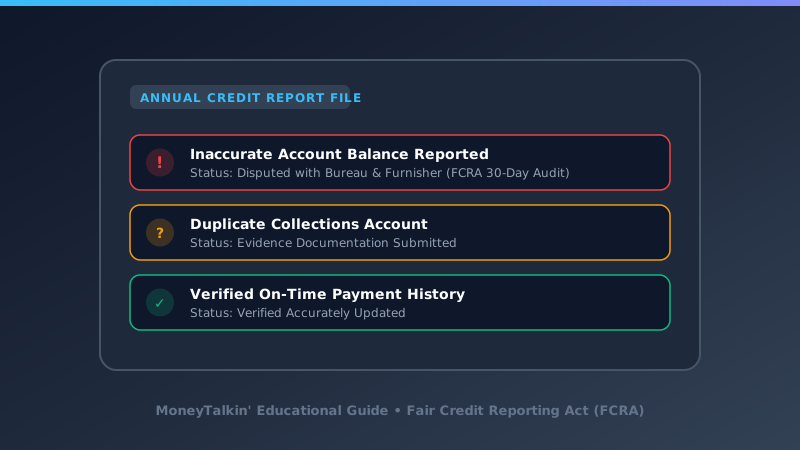
- Incorrect Payment Status: On-time payments misreported as 30, 60, or 90 days delinquent.
- Duplicate Account Reporting: The same debt listed multiple times under different collection agency names.
- Outdated Balances or Limits: Balances that omit recent payments, or credit limits reported below your actual limit.
C. Outdated Information (FCRA Statutory Limits)
Under the FCRA, most negative information must be removed after statutory timeframes:
- Late Payments, Delinquencies, and Collections: Deleted after 7 years from the initial delinquency date.
- Chapter 7 Bankruptcy: Deleted after 10 years from filing.
- Chapter 13 Bankruptcy: Deleted after 7 years from filing.
3. How to Obtain Your Free Official Credit Reports
Under federal law (the FACT Act), consumers can access free credit reports through the official portal:
$$\textbf{Official Portal: } \text{AnnualCreditReport.com}$$
- Access: Consumers can access free weekly online credit reports from Equifax, Experian, and TransUnion via AnnualCreditReport.com.
- Phone Access: Call toll-free at (877) 322-8228.
- Security: Avoid commercial imposter sites requiring paid subscriptions to view basic credit files.
4. Step-by-Step Guide to Disputing Credit Errors
If you discover incorrect information, the FCRA guarantees your legal right to dispute items for free:
[Identify Error] ➔ [Gather Proof] ➔ [File Bureau Dispute] ➔ [Notify Furnisher] ➔ [Review 30-Day Result]
Step 1: Gather Supporting Evidence
Collect documentation proving the inaccuracy: bank statements, canceled checks, final account statements showing a zero balance, or police reports/IdentityTheft.gov affidavits for identity theft.
Step 2: File a Dispute with the Credit Bureau
Submit a separate dispute to each bureau listing the error (online or by mail). Sending written letters via Certified Mail with Return Receipt Requested creates a verifiable paper trail establishing receipt. In your letter:
- Identify the specific account or line item.
- Explain why it is inaccurate.
- Enclose copies (never originals) of proof.
- Formally request correction or deletion.
Step 3: Contact the Data Furnisher
Under FCRA Section 623, data furnishers (creditors or collection agencies) have a legal duty to investigate disputes. Send a copy of your dispute letter and proof directly to the creditor's designated dispute address.
5. What Happens After You File a Dispute?
When a bureau receives your dispute:
- 30-Day Investigation Window: Under the FCRA, the bureau must investigate within 30 days (extended to 45 days if you provide additional documents during the review).
- Furnisher Review: The bureau forwards dispute data to the furnisher, which must review evidence and report findings back.
- Mandatory Correction or Deletion: If the information is verified as inaccurate or the furnisher fails to respond within 30 days, the bureau must legally correct or delete the item.
- Written Notice: The bureau sends written results and a free updated credit report if changes occurred.
6. What to Do if Your Dispute Is Denied
If a bureau or furnisher refuses to remove a disputed item:
- Request Verification Method: Under FCRA Section 611(a)(6)(B)(iii), request a written explanation detailing the entity contacted to verify data.
- Add a Consumer Statement: Request that a 100-word statement of dispute be attached to your file for future lenders.
- Submit a CFPB Complaint: File a consumer complaint with the Consumer Financial Protection Bureau (CFPB) at consumerfinance.gov/complaint.
- Consult Legal Counsel: Consult a consumer law attorney specializing in FCRA violations if verified errors cause financial harm.
7. Special Considerations for Identity Theft
For fraudulent accounts:
- Report Theft: File a recovery plan at IdentityTheft.gov and file a police report.
- Place a Fraud Alert: Request an initial 1-year fraud alert with one bureau (which notifies the other two).
- Place a Security Freeze: Place a free credit freeze on your Equifax, Experian, and TransUnion files to block new unauthorized accounts.
8. Summary Checklist for Credit Report Disputes
- Download Free Reports: Access reports via AnnualCreditReport.com.
- Highlight Specific Errors: Mark wrong balances, incorrect late marks, or duplicate entries.
- Gather Proof: Enclose bank statements, checks, or dispute letters.
- Send Certified Disputes: Mail notices with proof to bureaus and furnishers.
- Track 30-Day Results: Calendar 30 days to review written investigation notices.
Sources
- Consumer Financial Protection Bureau (CFPB): Disputing Errors on Credit Reports https://www.consumerfinance.gov/consumer-tools/credit-reports-and-scores/dispute-error-on-credit-report/
- Federal Trade Commission (FTC): Disputing Credit Errors & Identity Theft https://consumer.ftc.gov/articles/disputing-errors-your-credit-reports
- Annual Credit Report: Official Free Credit Reports Portal https://www.annualcreditreport.com/
Educational Disclaimer
This article is for educational and informational purposes only and does not constitute formal legal, credit counseling, or financial advice. Dispute procedures, statutory investigation timelines, and consumer rights are governed by federal and state laws. Consult a qualified consumer law attorney or accredited non-profit credit counselor regarding individual legal disputes.
MoneyTalkin' provides financial education, educational concepts, and general informational guides. Articles do not constitute personalized financial, investment, legal, or tax advice. Financial products, rates, terms, and regulatory rules change frequently; consult a qualified financial professional regarding your specific situation. Read our full Disclaimer Policy.
Written by MoneyTalkin'
MoneyTalkin' researches and publishes objective financial education content, money management fundamentals, and practical financial guides.