How Credit Scores Work: What Affects Your Score?
Detailed financial analysis and educational guide on How Credit Scores Work: What Affects Your Score?.
How Credit Scores Work: A Breakdown of FICO and VantageScore Models
A credit score is a three-digit numerical representation of an individual's creditworthiness, ranging from 300 to 850. Lenders, credit card issuers, mortgage underwriters, landlords, auto dealers, and insurance companies use credit scores to evaluate the probability that a borrower will repay debt obligations on time.
Understanding the internal mechanics of credit scoring models allows consumers to strategically build, protect, and optimize their credit profiles, securing lower interest rates on loans and saving tens of thousands of dollars over a lifetime.
Executive Summary: Credit Score Factors
- Primary Scoring Models: FICO Score (used in 90%+ of top lending decisions) and VantageScore.
- Score Range: 300 (Poor) to 850 (Exceptional).
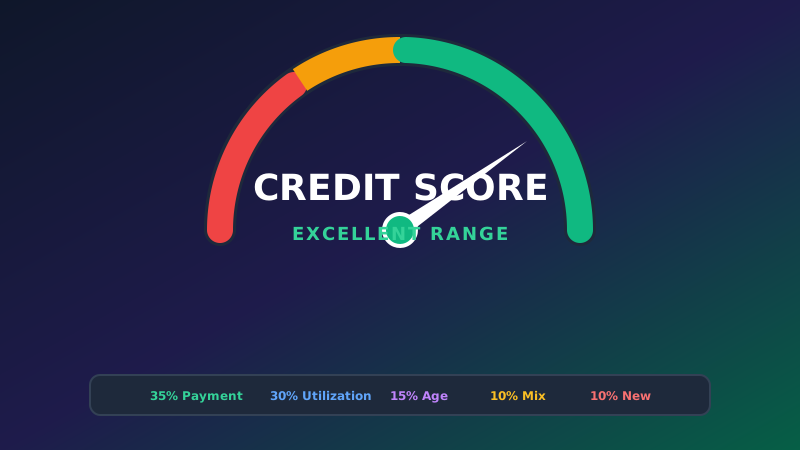
- Core FICO Factors: Payment History (35%), Amounts Owed / Credit Utilization (30%), Length of Credit History (15%), New Credit (10%), and Credit Mix (10%).
- Credit Bureau Sources: Equifax, Experian, and TransUnion.
The 5 Core Factors That Determine Your FICO Score
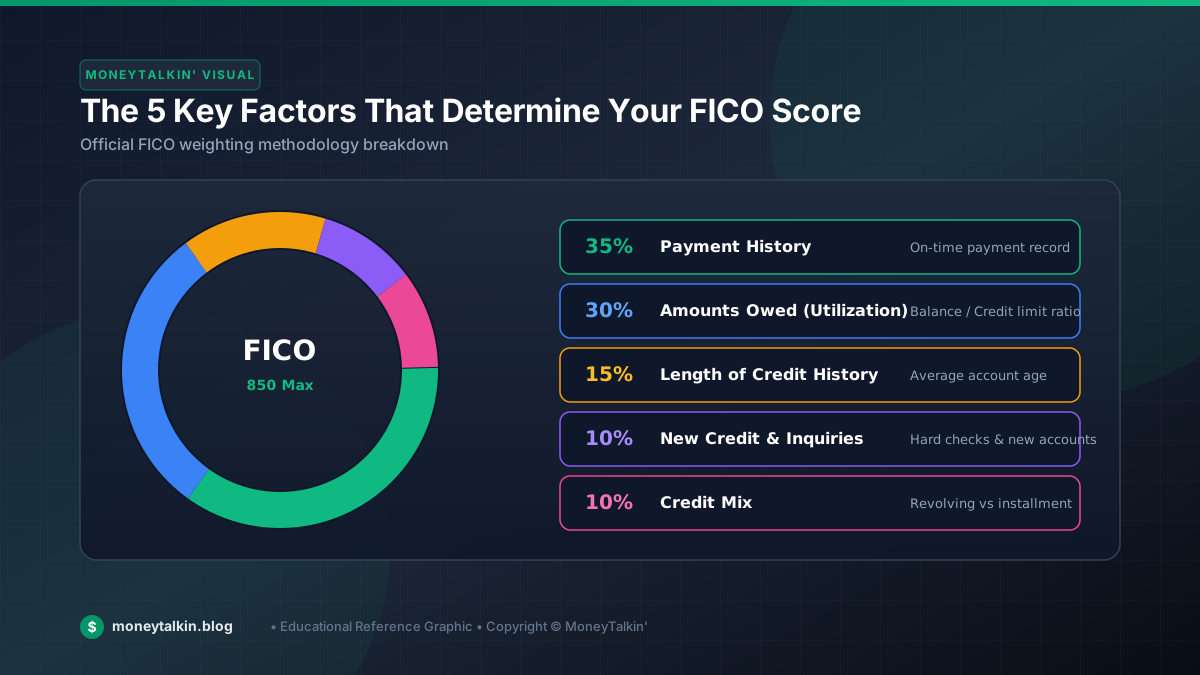
                   FICO CREDIT SCORE FACTOR BREAKDOWN
┌───────────────────────────────────────────────────┬───────────┐
│ Factor                                            │ Weight %  │
├───────────────────────────────────────────────────┼───────────┤
│ 1. Payment History (On-time payment record)       │    35%    │
│ 2. Credit Utilization Ratio (Amounts owed vs limits)│   30%    │
│ 3. Length of Credit History (Average age of accounts)│  15%    │
│ 4. New Credit & Hard Inquiries                    │    10%    │
│ 5. Credit Mix (Revolving vs Installment debt)     │    10%    │
└───────────────────────────────────────────────────┴───────────┘
1. Payment History (35% Weight)
Your track record of paying monthly bills on time is the single most important variable. A single 30-day late payment can drop a good credit score by 50 to 100 points and remains on credit reports for 7 years.
2. Credit Utilization Ratio (30% Weight)
Credit utilization measures the percentage of your available revolving credit limits currently being used:
$$\text{Credit Utilization Ratio} = \frac{\text{Total Revolving Credit Balances}}{\text{Total Revolving Credit Limits}} \times 100$$
Example: Carrying a $1,500 balance across credit cards with a total combined limit of $10,000 yields a 15% utilization ratio. Financial experts recommend keeping overall and per-card utilization below 30%, with optimal scoring occurring below 10%.
3. Length of Credit History (15% Weight)
Scoring models evaluate the age of your oldest account, the age of your newest account, and the average age of all accounts combined (AAoA). Closing your oldest credit card reduces your average account age, which can lower your score.
4. New Credit & Inquiries (10% Weight)
Applying for new credit triggers a hard inquiry, which temporarily dips your score by 3 to 5 points. Opening multiple new accounts within a short window signals potential credit distress to lenders.
5. Credit Mix (10% Weight)
Lenders prefer borrowers who successfully manage a diverse mix of credit types, including revolving accounts (credit cards) and installment loans (auto loans, mortgages, student loans).
Credit Score Ranges and Lending Impact
| Score Range | Rating Category | Interest Rate & Approval Impact |
|---|---|---|
| 800 – 850 | Exceptional | Best available interest rates; premium credit card approvals |
| 740 – 799 | Very Good | Highly competitive rates; easy loan approvals |
| 670 – 739 | Good | Standard market rates; baseline approval threshold |
| 580 – 669 | Fair | Higher interest rates; mandatory mortgage insurance |
| 300 – 579 | Poor | High rejection risk; subprime interest rates; deposit required |
Practical Takeaway Checklist
- Check your credit reports annually for free at AnnualCreditReport.com.
- Set up auto-pay for at least minimum payments on all accounts to protect your 35% payment history.
- Keep total revolving credit utilization below 10% for optimal scoring.
- Avoid closing your oldest credit card accounts.
- Space out new credit card applications by at least 6 months.
Sources
- Consumer Financial Protection Bureau (CFPB): Credit Reports and Scores Guide
https://www.consumerfinance.gov/consumer-tools/credit-reports-and-scores/ - FICO: How Credit Scores Are Calculated
https://www.myfico.com/credit-education/whats-in-your-score
Disclaimer
Educational content only. MoneyTalkin does not provide personalized credit repair services.
FICO 8 vs. VantageScore 3.0: Understanding Scoring Models
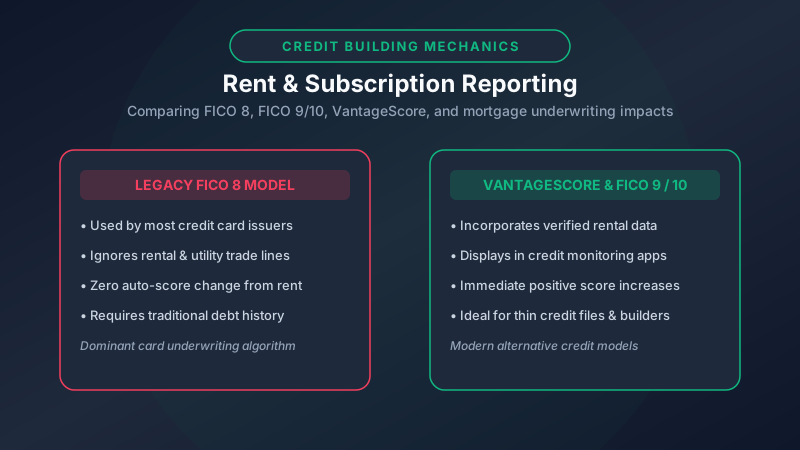
While FICO Scores remain the predominant scoring model used by mortgage and credit card underwriters, consumers frequently encounter VantageScore metrics on free credit monitoring apps.
| Feature / Metric | FICO Score 8 | VantageScore 3.0 |
|---|---|---|
| Primary Usage | 90%+ of top U.S. lending decisions | Free credit monitoring & fintech apps |
| Minimum Credit History | 6 months of account activity required | Requires only 1 month of activity |
| Payment History Weight | 35% of total score | 40% (Most influential factor) |
| Credit Utilization Weight | 30% of total score | 20% (Highly influential factor) |
Disputing Credit Report Errors Under FCRA
Under the federal Fair Credit Reporting Act (FCRA), consumers have the legal right to dispute inaccurate, incomplete, or fraudulent information on credit reports:
- Obtain free annual credit reports from AnnualCreditReport.com.
- File written or online disputes directly with the credit bureau (Equifax, Experian, TransUnion) detailing the specific inaccurate trade line.
- Credit bureaus are legally obligated to investigate and resolve disputes within 30 days. Read details in our guide to credit report errors disputes explained.
Practical Actions to Improve Your Credit Score
Improving credit score standing requires systematic credit management actions:
- Automate Minimum Payments: Establish automatic monthly payments for all revolving cards and installment loans to ensure zero 30-day late payment delinquencies.
- Keep Revolving Utilization Under 10%: Pay down credit card balances before statement closing dates to report low credit utilization metrics.
- Keep Older Accounts Open: Maintain legacy credit card accounts to preserve average age of credit history.
Summary Checklist for Credit Optimization
- Pay 100% of Statement Balances Monthly: Avoid revolving credit card balances to eliminate daily interest charges.
- Monitor Credit Reports Regularly: Check free credit reports at AnnualCreditReport.com at least once annually.
- Avoid Opening Too Many Accounts Simultaneously: Space out new credit applications by at least 6 months to minimize hard inquiries.
Educational Summary & Key Definitions
Understanding financial fundamentals requires mastering core vocabulary and operational definitions:
- Principal: The original amount of money deposited or borrowed, excluding interest earnings or finance charges.
- Annual Percentage Yield (APY): The real rate of return earned on a deposit account, taking into account the effect of compounding interest over a 12-month period.
- Liquidity: The ease and speed with which an asset can be converted into liquid cash without incurring significant capital loss.
- Diversification: An investment risk management strategy that mixes a wide variety of investments within a portfolio to limit exposure to any single asset class.
Consulting official regulatory guidelines—such as disclosures from the CFPB, FDIC, NCUA, and Federal Reserve—ensures you make informed financial decisions backed by verified consumer protections.
MoneyTalkin' provides financial education, educational concepts, and general informational guides. Articles do not constitute personalized financial, investment, legal, or tax advice. Financial products, rates, terms, and regulatory rules change frequently; consult a qualified financial professional regarding your specific situation. Read our full Disclaimer Policy.
Written by MoneyTalkin'
MoneyTalkin' researches and publishes objective financial education content, money management fundamentals, and practical financial guides.