How to Build Credit from Scratch (With No Prior History)
Detailed financial analysis and educational guide on How to Build Credit from Scratch (With No Prior History).
How to Build Credit from Scratch: A Step-by-Step Blueprint for Beginners
Building a credit score from scratch presents a classic economic dilemma: you need credit history to get approved for a loan or credit card, but you cannot get approved without an existing credit history.
Having no credit score ("credit thin" or "credit invisible") is different from having bad credit. Having bad credit means you have a history of missed payments or defaults, while having no credit simply means major credit bureaus (Equifax, Experian, TransUnion) lack sufficient data to generate a score. This guide provides a step-by-step roadmap to establish an excellent credit profile safely and efficiently.
Executive Summary: Credit Building Roadmap
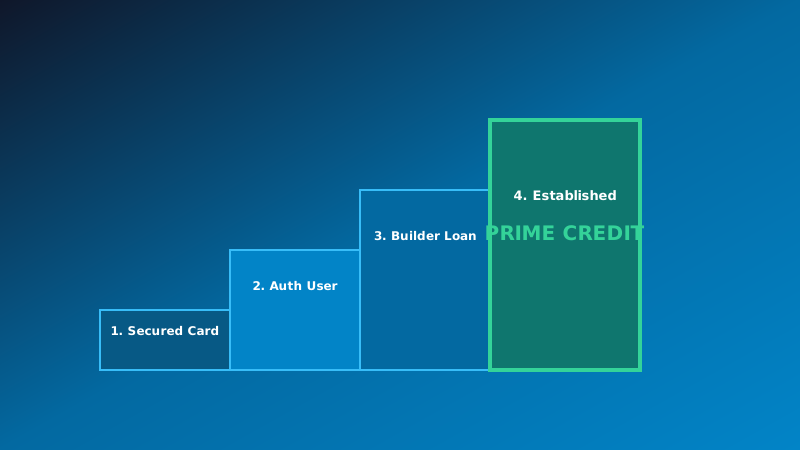
- Starting Tools: Secured Credit Cards, Credit-Builder Loans, and Authorized User Status.
- Time Required: Approximately 3 to 6 months of active reporting to generate an initial FICO score.
- Golden Rule: Never carry a balance or pay interest to build credit. Pay statement balances in full every month.
- Target Utilization: Keep reported revolving balances under 10% of total credit limits.
The 4 Safest Methods to Establish Credit
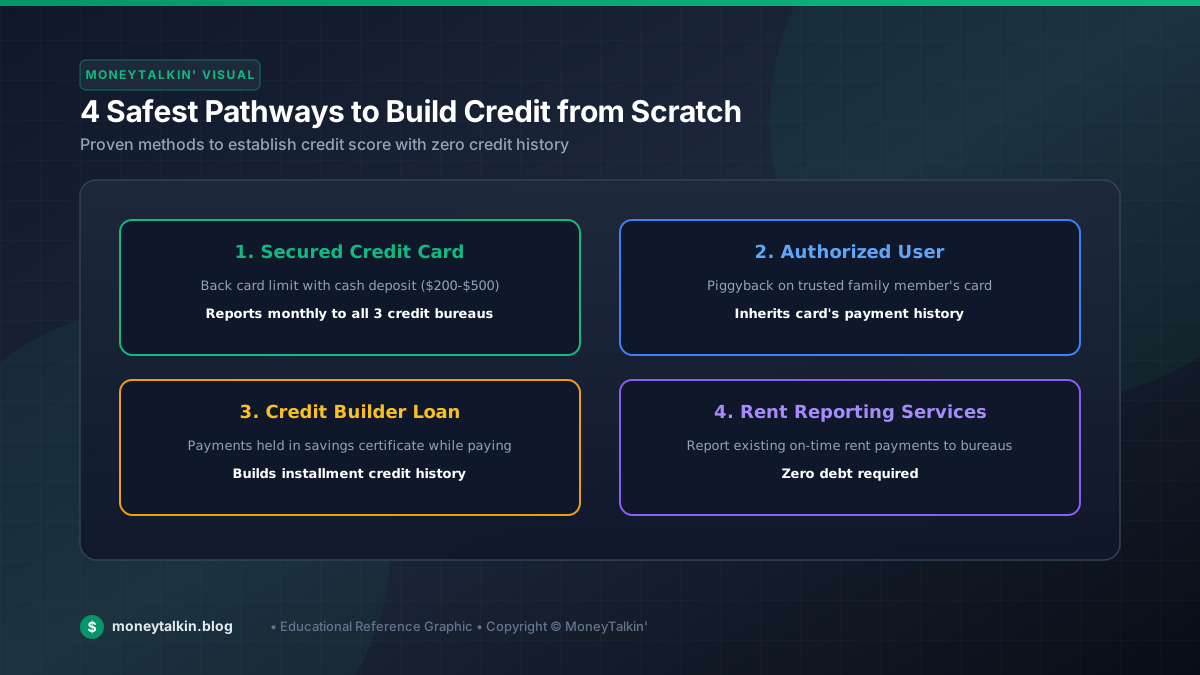
                   CREDIT BUILDING TOOLBOX FOR BEGINNERS
┌───────────────────────────┐     ┌───────────────────────────┐     ┌───────────────────────────┐
│ Method 1: Secured Credit  │ ──► │ Method 2: Authorized User │ ──► │ Method 3: Credit-Builder  │
│ Card (Collateral Backed)  │     │ (Parent / Spouse Account) │     │ Loan (Savings Account)    │
└───────────────────────────┘     └───────────────────────────┘     └───────────────────────────┘
1. Secured Credit Cards
A secured credit card requires a refundable cash security deposit that serves as your credit limit (e.g., a $300 deposit creates a $300 credit limit).
- How It Builds Credit: The issuer reports your monthly payment activity and balance to Equifax, Experian, and TransUnion just like a standard credit card.
- Graduation Process: After 6 to 12 months of consecutive on-time payments, most issuers refund your deposit and upgrade the account to an unsecured credit card.
2. Becoming an Authorized User
If a trusted family member has a credit card account with a long history of on-time payments and low utilization, they can add you as an authorized user.
- How It Builds Credit: The primary account holder's positive payment history and account age are imported onto your credit report, boosting your score without requiring a credit check.
- Precaution: Ensure the issuer reports authorized user data to all three credit bureaus, and confirm the primary cardholder maintains pristine payment habits.
3. Credit-Builder Loans
Offered by community banks and credit unions, a credit-builder loan holds the borrowed loan amount (e.g., $1,000) in a locked savings account while you make fixed monthly payments over 12 to 24 months.
- How It Builds Credit: Each monthly payment is reported as positive installment loan activity. Once the loan term finishes, the financial institution releases the locked $1,000 balance back to you.
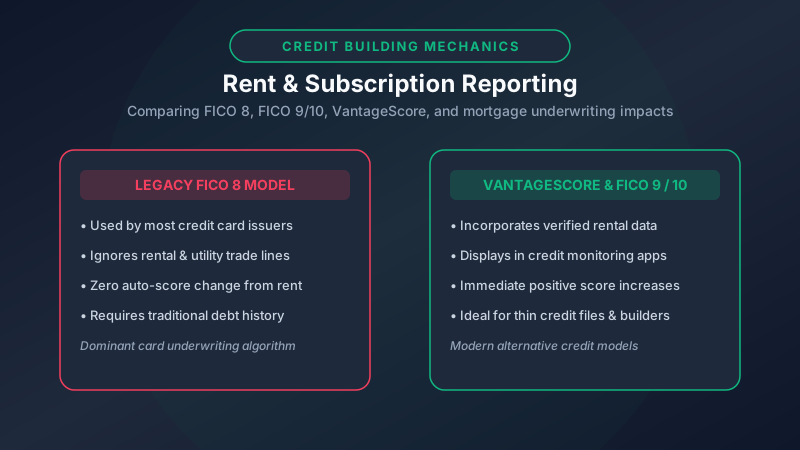
4. Rent and Utility Reporting Services like Experian Boost or specialized rent-reporting tools allow renters to report monthly recurring utility and rent payments to credit bureaus, adding positive payment data to their files.
Step-by-Step Execution Plan
- Month 1: Apply for an FDIC-insured secured credit card with no annual fee. Place a $300 cash security deposit.
- Month 1–6: Put a small, recurring monthly charge (e.g., a $15 streaming subscription) on the card. Set up Auto-Pay to pay the full statement balance automatically every month.
- Month 6: Verify that your first FICO score has generated. Check your credit reports at AnnualCreditReport.com to ensure all activity is reporting accurately.
- Month 12: Request a product upgrade to an unsecured credit card and request your security deposit refund.
Common Beginner Mistakes to Avoid
- Carrying a Balance to "Build Credit": Carrying a monthly balance does NOT build credit faster; it simply incurs unnecessary credit card interest charges.
- Maxing Out Low Credit Limits: Spending $270 on a $300 limit creates a 90% credit utilization ratio, severely dragging down your score. Keep spending under $30.
- Applying for Multiple Cards at Once: Submitting several card applications creates multiple hard inquiries, signaling desperation to potential lenders.
Practical Takeaway Checklist
- Apply for a no-annual-fee secured card or ask a relative to add you as an authorized user.
- Set up automatic monthly payments for 100% of the statement balance.
- Keep credit utilization below 10% on your small credit limit.
- Monitor your progress using free credit report tools after 6 months.
Sources
- Consumer Financial Protection Bureau (CFPB): Building Credit from Scratch
https://www.consumerfinance.gov/consumer-tools/credit-reports-and-scores/ - MyFICO: Credit Score Requirements for Beginners
https://www.myfico.com/credit-education
Disclaimer
Educational material only. MoneyTalkin does not provide formal credit counseling advice.
Secured Credit Cards & Credit-Builder Loans
For individuals with no credit history, standard credit card applications are often declined. Three structured credit-building tools provide accessible entry points:
- Secured Credit Cards: Require a refundable cash security deposit (e.g., $200 to $500) that serves as your credit limit. Card issuers report monthly payment activity to Equifax, Experian, and TransUnion. Making small purchases and paying statement balances in full builds credit history safely.
- Credit-Builder Loans: Offered by credit unions and community banks. The lender places loan proceeds into a locked savings account while you make monthly payments over 12 to 24 months. Payments are reported to credit bureaus, and principal is released upon completion.
- Authorized User Status: Becoming an authorized user on a family member's established credit card account adds that account's positive credit history to your report.
Understand credit metrics in credit utilization ratio explained.
Key Rules for First-Time Credit Card Users
To establish a 700+ FICO credit score safely within your first 12 months:
- Use Cards for Small Fixed Expenses: Charge one recurring subscription (e.g., streaming service) to your card and set up automatic full statement balance payments.
- Never Carry a Revolving Balance: Pay statement balances 100% in full every month to avoid daily compounding interest charges.
Educational Summary & Key Definitions
Understanding financial fundamentals requires mastering core vocabulary and operational definitions:
- Principal: The original amount of money deposited or borrowed, excluding interest earnings or finance charges.
- Annual Percentage Yield (APY): The real rate of return earned on a deposit account, taking into account the effect of compounding interest over a 12-month period.
- Liquidity: The ease and speed with which an asset can be converted into liquid cash without incurring significant capital loss.
- Diversification: An investment risk management strategy that mixes a wide variety of investments within a portfolio to limit exposure to any single asset class.
Consulting official regulatory guidelines—such as disclosures from the CFPB, FDIC, NCUA, and Federal Reserve—ensures you make informed financial decisions backed by verified consumer protections.
See how reporting monthly rent builds scores in Can Rent & Subscriptions Build Credit?.
MoneyTalkin' provides financial education, educational concepts, and general informational guides. Articles do not constitute personalized financial, investment, legal, or tax advice. Financial products, rates, terms, and regulatory rules change frequently; consult a qualified financial professional regarding your specific situation. Read our full Disclaimer Policy.
Written by MoneyTalkin'
MoneyTalkin' researches and publishes objective financial education content, money management fundamentals, and practical financial guides.