Buy Now, Pay Later (BNPL): Convenience vs. Financial Trap
Detailed financial analysis and educational guide on Buy Now, Pay Later (BNPL): Convenience vs. Financial Trap.
Buy Now, Pay Later (BNPL) services—offered by companies such as Klarna, Afterpay, Affirm, Zip, and PayPal Pay in 4—have exploded in popularity over recent years. Integrated seamlessly into checkout screens at thousands of online retailers, BNPL allows consumers to make immediate purchases and split the total cost into smaller, interest-free installment payments over several weeks or months.
While BNPL is marketed as a convenient, modern alternative to high-interest credit cards, it carries subtle financial traps, behavioral spending risks, regulatory changes, and potential credit score consequences that every consumer must understand.
In this comprehensive guide, we unpack how BNPL works, analyze the standard "Pay-in-4" structure, compare BNPL directly against traditional credit cards, examine hidden fees, explore psychological spending traps, and explain how to use these services responsibly without damaging your financial health.
How Buy Now, Pay Later Works
BNPL is a short-term point-of-sale installment loan structure. When you select a BNPL option at an online checkout, the BNPL provider pays the retailer in full for your item (minus a merchant transaction fee) and assumes the responsibility of collecting payments from you.
+-----------------------------------------------------------------------+
|                    THE STANDARD "PAY-IN-4" TIMELINE                   |
+-----------------------------------------------------------------------+
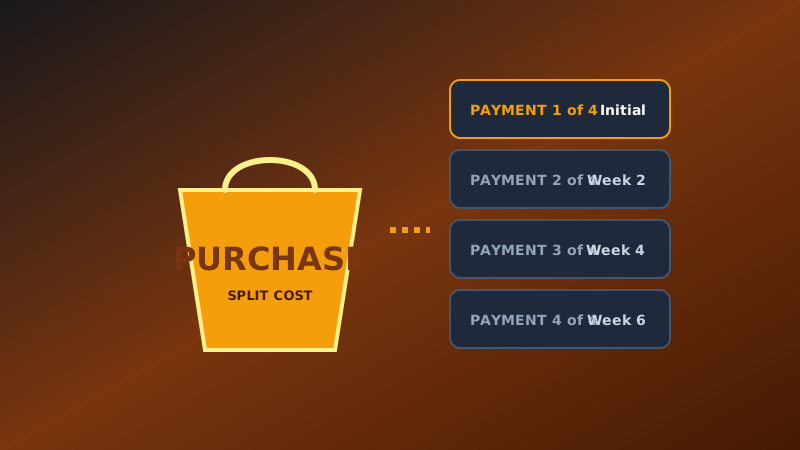
 [ Checkout Day ]   ---> Pay 25% Upfront ($50 on a $200 purchase)
 [ Week 2 ]         ---> Auto-Debit 25% ($50)
 [ Week 4 ]         ---> Auto-Debit 25% ($50)
 [ Week 6 ]         ---> Auto-Debit 25% ($50) -- Loan Fully Paid
The Mechanics of the "Pay-in-4" Loan
The most common BNPL product is the Pay-in-4 model:
- Initial Deposit: You pay 25% of the total purchase price at checkout using a debit card or credit card.
- Remaining Installments: The remaining 75% is divided into three equal payments automatically debited from your linked card every two weeks over a six-week period.
- Interest Rate: If all payments are made on time, the interest rate is 0%.
Why BNPL Is Booming: The Merchant & Consumer Dynamic
Understanding why BNPL services exist reveals their primary financial risk: they are explicitly engineered to make consumers spend more money.
The Merchant's Perspective
Retailers pay BNPL platforms a transaction fee ranging from 2% to 8% per purchase—significantly higher than standard credit card processing fees (1.5% to 3.5%). Why are merchants willing to pay higher fees?
- Increased Conversion Rates: Shoppers are less likely to abandon their online shopping carts when presented with lower upfront payment numbers.
- Higher Average Order Value (AOV): Studies show that consumers spend 20% to 50% more per transaction when using BNPL installment options compared to traditional payment methods.
The Consumer's Perspective
Consumers are drawn to BNPL because:
- Zero Interest: No interest charges if payments are made on time.
- No Soft/Hard Credit Hurdle: Many BNPL providers perform only a soft credit check (which does not impact credit scores) or require no credit check at all.
- Instant Approval: Instant decisioning at checkout without formal paper applications.
BNPL vs. Credit Cards: Head-to-Head Comparison
| Feature | Buy Now, Pay Later (Pay-in-4) | Traditional Credit Card |
|---|---|---|
| Upfront Interest Rate | 0% (if paid on schedule) | 18% – 30% APR (if balance carried) |
| Credit Check Required | Soft check or none | Hard credit inquiry required |
| Repayment Structure | Fixed bi-weekly installment schedule | Flexible minimum monthly payment |
| Purchase Protection | Limited / Varies by provider | Robust Federal Protections (FCBA) |
| Rewards & Cash Back | Rarely offered | 1% – 5% Cash back or points |
| Impact of Late Payments | Late fees + account suspension | Late fees + major credit score damage |
Hidden Risks and Financial Traps of BNPL
While BNPL can be a useful budgeting tool for disciplined shoppers, it introduces significant financial risks if misused.
THE BNPL OVER-EXTENSION CASCADE:
[ Multiple $30/mo Installments ] ---> [ Cumulative Monthly Obligations Exceed Budget ]
                                                   |
                                                   v
                            [ Account Auto-Debits Cause Bank Overdraft Fees ]
                                                   |
                                                   v
                         [ Missed Payments Trigger Late Fees & Collections ]
1. Impulse Buying and "Micropayments Fatigue"
The primary danger of BNPL is psychological. Splitting a $400 jacket into four $100 payments makes the item feel significantly cheaper than it is. When consumers stack multiple BNPL loans across different apps (e.g., $30/month for shoes, $40/month for tech, $25/month for clothes), these small recurring commitments quickly accumulate into an unmanageable monthly debt burden.
2. Bank Overdraft & Insufficient Funds Fees
BNPL services require linked debit cards or bank accounts for automatic deductions. If your bank balance is low when a bi-weekly installment is debited, your bank may charge an Overdraft or Insufficient Funds (NSF) fee (typically $30–$35 per attempt), turning an interest-free purchase into an expensive penalty cycle.
3. Credit Bureau Reporting Changes
Historically, BNPL loans were not reported to major credit bureaus (Equifax, Experian, TransUnion). However, credit reporting agencies are increasingly integrating BNPL data into credit files:
- Positive Impact: Timely payments may gradually build credit histories.
- Negative Impact: Missed or delinquent BNPL payments can be sent to collection agencies and severely damage your credit score.
Regulatory Landscape and Consumer Protections
In May 2024, the Consumer Financial Protection Bureau (CFPB) issued an official interpretative rule clarifying that BNPL providers are legally classified as credit card providers under Truth in Lending laws (Regulation Z).
Key Consumer Rights Under CFPB Guidelines:
- Right to Dispute Charges: Consumers have the right to dispute fraudulent or damaged purchases directly with BNPL lenders.
- Mandatory Refund Credits: Lenders must credit refunds promptly when items are returned to merchants.
- Transparent Billing Statements: Lenders must provide clear written disclosures detailing payment due dates, fees, and remaining loan balances.
Guidelines for Responsible BNPL Usage
If you choose to use BNPL services, follow these four strict ground rules:
- Only Use BNPL for Planned Purchases: Never use BNPL to justify an impulse buy that you could not afford to pay for in cash today.
- Limit Yourself to One Active BNPL Loan at a Time: Never stack multiple installment plans simultaneously across different apps.
- Link a Credit Card or Dedicated Account: Link your BNPL account to a card or account with sufficient buffer funds to avoid overdraft penalties.
- Track Installment Dates in Your Calendar: Treat BNPL installment dates as fixed bill obligations within your monthly budget.
Frequently Asked Questions (FAQ)
Does using Buy Now, Pay Later affect my credit score?
Applying for a standard Pay-in-4 BNPL plan usually requires only a soft credit inquiry, which does not lower your credit score. However, failing to make payments on time can result in late reporting to credit bureaus or referral to collection agencies, which will harm your credit score.
Can I return items purchased with BNPL?
Yes, but the return process requires two steps. You must return the merchandise directly to the retailer. Once the retailer processes the refund, they notify the BNPL provider, who then refunds your completed installments and cancels future scheduled payments.
Are longer-term BNPL loans (12–36 months) interest-free?
No. While short-term "Pay-in-4" plans are generally interest-free, longer-term BNPL loans (e.g., 12 to 36 months for major furniture or electronics purchases) often carry APRs ranging from 10% to 30%, similar to traditional personal loans or credit cards.
Editorial Summary & Related Content
Buy Now, Pay Later offers flexibility and zero-interest terms for disciplined consumers making planned purchases. However, it requires strict tracking to avoid over-extension, unexpected bank overdraft fees, and debt accumulation.
For more insights into debt management and smart payment strategies, check out:
- Credit Scores Explained: How They Work
- Debt Snowball vs. Debt Avalanche
- How to Audit Your Monthly Expenses
Disclaimer: MoneyTalkin' provides financial education for informational purposes only. We do not promote or recommend specific BNPL services. Always read installment agreements carefully before committing to point-of-sale financing.
MoneyTalkin' provides financial education, educational concepts, and general informational guides. Articles do not constitute personalized financial, investment, legal, or tax advice. Financial products, rates, terms, and regulatory rules change frequently; consult a qualified financial professional regarding your specific situation. Read our full Disclaimer Policy.
Written by MoneyTalkin'
MoneyTalkin' researches and publishes objective financial education content, money management fundamentals, and practical financial guides.