AI Agent Wallets and Solana Memecoin Trading: How Much Activity Is Actually Automated?
A technical data audit examining reported estimates of AI agent wallet trading on Solana DEXs, analyzing transaction velocity, bot classification, and measurement limits.
AI Agent Wallets and Solana Memecoin Trading: How Much Activity Is Actually Automated?
The intersection of artificial intelligence and decentralized finance (DeFi) has generated intense interest across digital asset markets. High-throughput blockchains with sub-second block times and low transaction fees—most notably Solana—have become primary testing grounds for autonomous agentic trading infrastructure.
Industry headlines and market research reports have highlighted rapid growth in on-chain activity generated by programmatic AI agent wallets trading speculative tokens on decentralized exchanges (DEXs).
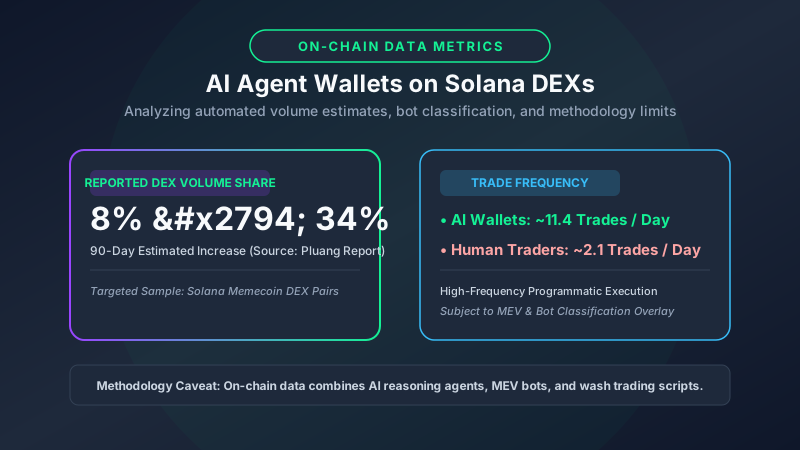
One widely cited report by regional crypto market media outlet Pluang (published in mid-2026) estimated that AI agent wallets expanded their share of daily memecoin DEX volume on Solana from approximately 8% to 34% over a 90-day period, with automated agent wallets executing an average of 11.4 trades per day compared to 2.1 trades per day for human-operated wallets.
Rather than presenting these reported figures as unverified industry facts, this article independently examines the data source, analyzes the methodology behind on-chain wallet classification, investigates the line separating true AI reasoning agents from traditional trading bots, and outlines the severe risks facing retail participants in automated token markets.
1. Contextualizing Reported On-Chain Estimates
To evaluate on-chain market statistics objectively, analysts must inspect the origin and scope of published metrics:
Raw On-Chain Transaction Stream -> Algorithmic Filtering -> HEURISTIC: High Frequency + API Signers -> "AI Agent Wallet" Label
The Reported Metrics (Source: Pluang Industry Feed, 2026)
According to the published Pluang analysis tracking a 90-day sample of high-volatility Solana DEX liquidity pools:
- DEX Volume Share Growth: Estimated automated wallet volume increased from ~8% to ~34% of total daily volume across sampled DEX pairs.
- Daily Execution Velocity: Programmatic agent wallets executed an estimated average of 11.4 transactions per day, whereas self-custodial human wallets executed an average of 2.1 trades per day.
Crucial Data Limitations & Scope Constraints
While these numbers reflect significant programmatic activity, analysts highlight critical methodology caveats:
- Sample Concentration: The study analyzed specific high-velocity, speculative memecoin DEX pools rather than total aggregate Solana network volume across all tokens and decentralized applications.
- Definition Ambiguity: On-chain transaction ledgers record cryptographic signatures, not the software architecture behind them. Distinguishing an LLM-driven autonomous AI agent from a basic Python script, a Maximal Extractable Value (MEV) arbitrage bot, or a wash trading algorithm requires speculative heuristic modeling.
2. How On-Chain Analysts Identify "Agent Wallets"
Because blockchain transactions are pseudonymous, analytics platforms rely on behavioral heuristics to categorize wallet addresses:
Behavioral Heuristics Used by Analysts
- High Transaction Velocity: Executing trades at rapid, precise intervals (e.g., multiple swaps per hour over 24-hour cycles) signals programmatic control rather than manual human wallet signing via mobile apps.
- Programmatic Signature Headers: Transactions originating from cloud server IP clusters or utilizing specialized RPC node providers (like Jito or Helius) indicate automated API key execution.
- Correlated Multi-Wallet Swarms: Groups of wallets executing identical buy or sell orders within milliseconds of an online social mention are flagged as automated bot networks.
3. AI Reasoning Agents vs. Traditional Trading Bots
A major point of confusion in market coverage is conflating autonomous AI reasoning agents with legacy programmatic trading bots:
| Dimension | Traditional Trading Bot | Autonomous AI Agent |
|---|---|---|
| Logic Structure | Hardcoded if/then rules (e.g., buy if RSI < 30) |
LLM reasoning, multi-step planning & natural language processing |
| Data Ingestion | Structured price & volume feeds | Unstructured data (social feeds, news, whitepapers, code audits) |
| Adaptability | Fixed strategy parameters; fails outside pre-set rules | Dynamic strategy adjustments based on real-time market context |
| Execution Latency | Ultra-fast (sub-millisecond HFT / MEV) | Slower (seconds to minutes due to LLM inference processing) |
The MEV Overlay
In low-fee environments like Solana, a substantial portion of high-velocity automated volume is generated by MEV (Maximal Extractable Value) bots. These bots scan the public transaction pool to execute front-running, back-running, or "sandwich" attacks against retail trades. Conflating MEV bots with AI agents inflates apparent "AI adoption" metrics.
4. Wash Trading & Artificial Volume Amplification
A major challenge in analyzing DEX volume is detecting wash trading—the practice of a single entity executing buy and sell transactions between controlled wallets to simulate high trading activity:
- Volume Inflation: Automated scripts can churn $10,000 of capital through hundreds of transactions per hour, creating millions of dollars in apparent daily volume to push a token to top trending lists on DEX screeners.
- Filter Complexities: Heuristic algorithms attempting to measure genuine retail or AI trading often mistake wash trading scripts for active AI agents, skewing published volume estimates upward.
4. Why Automated Trading Concentrates on Solana’s underlying architecture provides specific technical characteristics that attract automated agent developers:
- Sub-Second Block Times: Solana’s 400-millisecond block execution allows automated software to execute multi-leg trades nearly instantaneously.
- Sub-Cent Transaction Fees: Gas fees costing fractions of a cent ($0.0002 to $0.001 per transaction) enable high-frequency agent strategies that would be cost-prohibitive on high-fee networks like Ethereum Layer-1.
- Jito MEV Bundles: Developers utilize specialized validator client infrastructure (such as Jito) to submit atomic transaction bundles with tip incentives, guaranteeing that multi-step arbitrage or agent execution trades execute cleanly within a single block.
5. Risks for Retail Traders Facing Automated Agent Swarms
Retail investors participating in speculative token markets face severe operational disadvantages when competing against automated agent networks:
- Slippage & Front-Running: High-frequency agent scripts and MEV bots detect incoming retail orders and execute trades ahead of them, causing retail buyers to suffer negative price slippage.
- Automated Liquidity Removal: Automated agents programmed to take profits instantly will dump holdings the millisecond liquidity pools reach target thresholds, leaving human traders holding devalued assets.
- Security & Compromised API Keys: Deploying autonomous agent wallets requires storing private keys or delegated API tokens on cloud servers. If the server is hacked, the wallet balance can be drained instantly.
Delegated Private Key Security Risks
Running autonomous trading agents on high-throughput networks requires granting agent software continuous signing authority:
- Hot Wallet Exposure: Agent wallets must remain "hot" (connected to active internet nodes) with unencrypted private keys or delegated session keys stored in memory to sign transactions instantly.
- Smart Contract Allowance Risk: If an AI agent interacts with an unverified DEX contract, a malicious token contract can drain approval allowances, liquidating the entire wallet balance before human operators detect the breach.
6. Strategic Summary for Market Observers
While reported statistics from sources like Pluang highlight growing automation on DEX platforms, investors should interpret on-chain metrics with technical discipline:
- Recognize Measurement Imprecision: Published percentage figures reflect heuristic estimates across specific token samples, not absolute network-wide facts.
- Distinguish AI Reasoning from Basic Bots: Most programmatic volume remains driven by legacy MEV scripts and hardcoded quantitative bots rather than autonomous LLM agents.
- Explore Related AI Analyses: Review our comprehensive guides on autonomous AI agents in finance, evaluating whether AI agents amplify market crashes, legal frameworks around AI agent financial liability, and foundational economic concepts of digital scarcity.
- Maintain Risk Discipline: Never deploy critical capital into high-velocity automated DEX pools without implementing strict loss limits and isolating automated wallet permissions.
MoneyTalkin' provides financial education, educational concepts, and general informational guides. Articles do not constitute personalized financial, investment, legal, or tax advice. Financial products, rates, terms, and regulatory rules change frequently; consult a qualified financial professional regarding your specific situation. Read our full Disclaimer Policy.
Written by MoneyTalkin'
MoneyTalkin' researches and publishes objective financial education content, money management fundamentals, and practical financial guides.