Common Financial Scams & Phishing Tactics (And How to Spot Them)
Detailed financial analysis and educational guide on Common Financial Scams & Phishing Tactics (And How to Spot Them).
Common Financial Scams & Phishing Tactics (And How to Spot Them)
Financial fraud and scam tactics have evolved beyond crude email spam into sophisticated, highly convincing operations. Criminal syndicates leverage artificial intelligence, voice cloning, social engineering, and spoofed caller IDs to defraud consumers out of billions of dollars annually.
Protecting yourself requires understanding how modern financial scams operate, recognizing behavioral red flags, and knowing the immediate steps to take if you suspect your credentials or funds have been compromised.
Executive Summary: Top Financial Scams
- Impersonation Scams: Fraudsters posing as bank anti-fraud departments, government agencies (IRS, HMRC), or tech support.
- Peer-to-Peer (P2P) Payment Scams: Tricking victims into sending irreversible transfers via Zelle, Venmo, or Cash App.
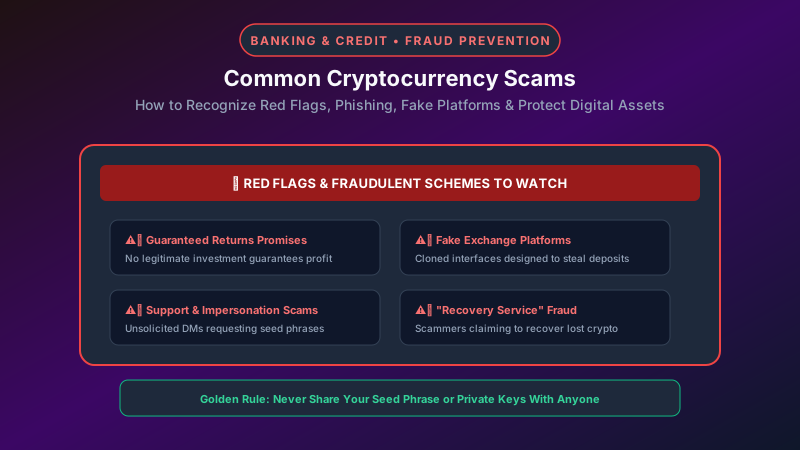
- Cryptocurrency & Digital Asset Scams: Fraudulent investment platforms, phishing, and fake support DMs. For detailed crypto fraud protection, see common-cryptocurrency-scams.
- Investment & Pig-Butchering Scams: Fake cryptocurrency or forex trading platforms promising guaranteed high returns.
- Golden Rule: No legitimate bank or government agency will demand immediate payment via gift cards, wire transfers, or P2P apps.
The 4 Most Prevalent Financial Scams Today
                   MODERN FINANCIAL SCAM TAXONOMY
┌─────────────────────────┐     ┌─────────────────────────┐     ┌─────────────────────────┐
│ 1. Bank Impersonation   │     │ 2. P2P "Reverse" Scam   │     │ 3. Pig-Butchering Crypto│
│ Spoofed Caller ID & SMS │ ──► │ False Payment Reversal  │ ──► │ Fake Return Dashboards  │
└─────────────────────────┘     └─────────────────────────┘     └─────────────────────────┘
1. Bank Anti-Fraud Impersonation Scams
A fraudster calls or texts you from a number that matches your bank's legitimate customer service line (using caller ID spoofing). They claim a suspicious charge was detected on your account and instruct you to transfer funds to a "safe security account" or read back an authentication code sent to your phone.
- The Trap: The authentication code actually authorizes a transfer out of your account to the fraudster.
2. Peer-to-Peer (P2P) Payment App Scams
Scammers contact users claiming a payment was made to them by mistake, asking them to send the money back. Alternatively, they pose as buyer/seller accounts on online marketplaces and request P2P transfers.
- The Trap: P2P services (like Zelle, Venmo, or Cash App) are designed for payments between trusted friends and family. Transfers are immediate and typically non-refundable.
3. Investment & "Pig-Butchering" Crypto Scams
Victims are contacted via social media or dating apps by scammers who build trust over weeks before introducing a "secret high-yield trading platform." The victim sees fake high returns on a fraudulent dashboard, encouraging larger deposits.
- The Trap: When the victim attempts to withdraw their funds, the platform demands additional "withdrawal taxes" or fees before vanishing.
4. Tech Support & Gift Card Scams
A pop-up window alerts you that your computer is infected with a virus, providing a phone number for "support." The fake technician gains remote access to your computer, opens your online bank account, and claims they accidentally deposited extra money, demanding repayment via gift cards or wire transfers.
Universal Red Flags of a Financial Scam
- Urgency and Fear: Demanding immediate action to prevent account seizure, arrest, or financial loss.
- Untraceable Payment Methods: Demanding payment via gift cards, cryptocurrency, wire transfers, or P2P payment apps.
- Requests for Verification Codes: Asking you to read back 6-digit one-time passcodes sent to your phone.
- Unsolicited Direct Contact: Receiving unexpected calls, texts, or emails claiming account emergencies.
Practical Takeaway Checklist
- Never share 6-digit login or verification passcodes with anyone.
- Hang up on unsolicited calls from "bank fraud departments" and call the number on your debit card.
- Treat P2P apps (Zelle, Venmo) like physical cash; only send money to people you know personally.
- Report financial scams immediately to the FTC at ReportFraud.ftc.gov.
Sources
- Federal Trade Commission (FTC): Consumer Fraud Reports & Data Spotlight
https://reportfraud.ftc.gov/ - Internet Crime Complaint Center (IC3): FBI Annual Elder & Financial Fraud Report
https://www.ic3.gov/
Disclaimer
Educational content only. Report fraud immediately to your financial institution.
Emerging Scams in 2026: AI Voice Spoofing & Crypto Fraud
As technology evolves, scammers deploy sophisticated tools to target retail consumers:
- AI Voice Clone Spoofing: Fraudsters use artificial intelligence audio models to clone the voices of family members or corporate executives, creating urgent imposter distress calls demanding immediate wire transfers or cryptocurrency payments.
- "Pig Butchering" Investment Scams: Scammers establish long-term rapport on social media or messaging platforms before luring victims into fake cryptocurrency or foreign exchange trading platforms promising guaranteed returns.
- QR Code Phishing ("Quishing"): Fraudulent QR codes placed on parking meters, public flyers, or phishing emails direct users to malicious websites designed to steal banking credentials.
Step-by-Step Incident Response Protocol
If you suspect you have fallen victim to a financial scam or exposed account credentials:
- Immediately Freeze Account Access: Contact your bank or credit card issuer to freeze compromised cards, reset passwords, and revoke active online banking sessions.
- File Official Regulatory Reports: Submit formal fraud reports to the Federal Trade Commission (FTC) at ReportFraud.ftc.gov and file a complaint with the FBI Internet Crime Complaint Center (IC3) at ic3.gov.
- Place Credit Bureau Fraud Alerts: Contact Equifax, Experian, or TransUnion to place a free 1-year fraud alert or credit freeze on your credit files to prevent unauthorized account openings.
Verification Checklist & Resource Directory
To protect personal assets and verify suspicious inquiries, utilize official consumer protection resources:
- Verify Financial Advisers & Brokers: Search FINRA BrokerCheck (
brokercheck.finra.org) to confirm professional licensing and disciplinary records. - Verify Federal Banking Insurance: Confirm institution credentials on the official FDIC BankFind directory (
bankfind.fdic.gov) or NCUA Credit Union locator (research.ncua.gov). - Identity Theft Restoration: If your Social Security number or personal data is compromised, create a recovery plan at IdentityTheft.gov managed by the FTC.
Essential Fraud Protection Principles
- Never Share One-Time Passcodes (OTPs): Financial institutions will never call or text asking for 2FA one-time security passcodes.
- Verify Inbound Callers: If receiving an urgent call from a bank or credit bureau, hang up and call the official number printed on the back of your debit card.
- Treat Crypto Payments as Final: Wire transfers and cryptocurrency payments carry zero buyer dispute protection.
Educational Summary & Key Definitions
Understanding financial fundamentals requires mastering core vocabulary and operational definitions:
- Principal: The original amount of money deposited or borrowed, excluding interest earnings or finance charges.
- Annual Percentage Yield (APY): The real rate of return earned on a deposit account, taking into account the effect of compounding interest over a 12-month period.
- Liquidity: The ease and speed with which an asset can be converted into liquid cash without incurring significant capital loss.
- Diversification: An investment risk management strategy that mixes a wide variety of investments within a portfolio to limit exposure to any single asset class.
Consulting official regulatory guidelines—such as disclosures from the CFPB, FDIC, NCUA, and Federal Reserve—ensures you make informed financial decisions backed by verified consumer protections.
MoneyTalkin' provides financial education, educational concepts, and general informational guides. Articles do not constitute personalized financial, investment, legal, or tax advice. Financial products, rates, terms, and regulatory rules change frequently; consult a qualified financial professional regarding your specific situation. Read our full Disclaimer Policy.
Written by MoneyTalkin'
MoneyTalkin' researches and publishes objective financial education content, money management fundamentals, and practical financial guides.
Related Technical Articles
Explore related topics in this cluster to deepen your understanding.