Buy Now, Pay Later's Quiet Takeover of Everyday Purchases
An in-depth report on how Buy Now, Pay Later (BNPL) transitioned from big-ticket items to everyday purchases, examining consumer installment mechanics, late fees, and regulatory oversight.
Buy Now, Pay Later's Quiet Takeover of Everyday Purchases
Over the past decade, Buy Now, Pay Later (BNPL) transformed from a niche payment method primarily used for high-cost discretionary items—such as consumer electronics, designer fashion, or home furniture—into a ubiquitous checkout option across everyday retail categories. Today, consumers regularly encounter BNPL financing options for routine grocery orders, food delivery apps, gasoline purchases, and everyday household supplies.
This shift represents a fundamental evolution in modern retail credit behavior. Understanding how BNPL operates in low-margin, high-frequency transactions requires examining merchant economics, point-of-sale installment structures, potential consumer debt hazards, credit bureau reporting developments, and recent regulatory enforcement by the Consumer Financial Protection Bureau (CFPB).
1. How Everyday BNPL Point-of-Sale Installments Work
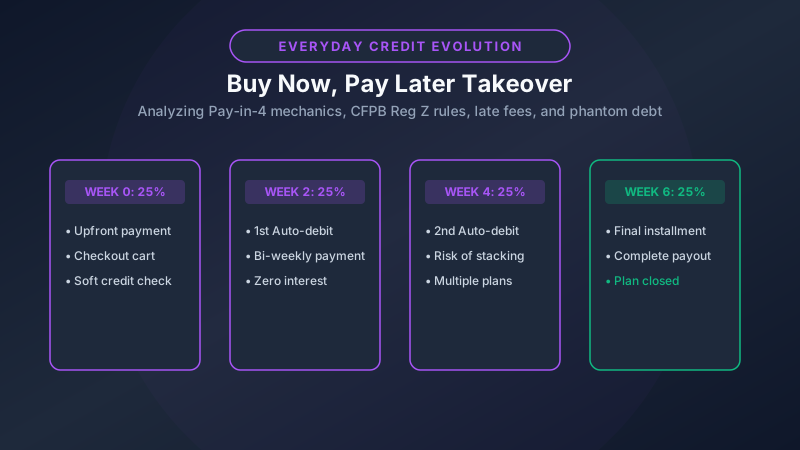
The dominant retail BNPL structure for low-dollar transactions is the Pay-in-4 model. Under this arrangement:
-
The consumer pays 25% of the total purchase amount upfront at checkout using a debit card, credit card, or bank transfer.
-
The remaining 75% is divided into three equal installments due every two weeks over a six-week period.
-
If paid on time according to the schedule, the consumer incurs zero explicit interest charges or finance fees.
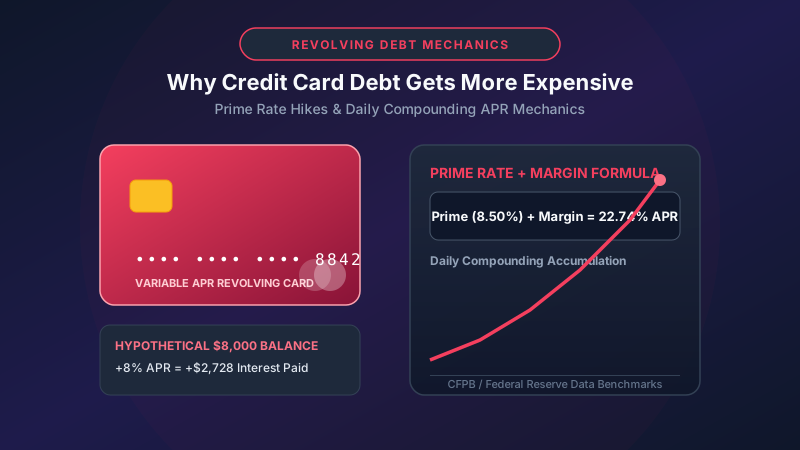
While zero-interest financing appears advantageous compared to revolving credit card APRs (which frequently exceed 20% to 28%), BNPL providers generate revenue through alternative mechanisms. The primary revenue driver is the merchant discount fee. Merchants pay BNPL providers between 3% and 6% of the transaction value—significantly higher than standard credit card interchange rates of 1.5% to 2.5%. Merchants absorb this higher fee because BNPL integration substantially increases cart conversion rates and average order values.
2. The Illusion of Affordability and 'Phantom Debt'
The expansion of BNPL into routine, small-dollar purchases introduces significant behavioral finance risks. When a $120 grocery bill is split into four $30 bi-weekly payments, the immediate cash outlay feels modest. However, when consumers use BNPL across multiple merchants simultaneously—for food delivery on Tuesday, gas on Thursday, and clothing on Saturday—tracking cash obligations becomes complex.
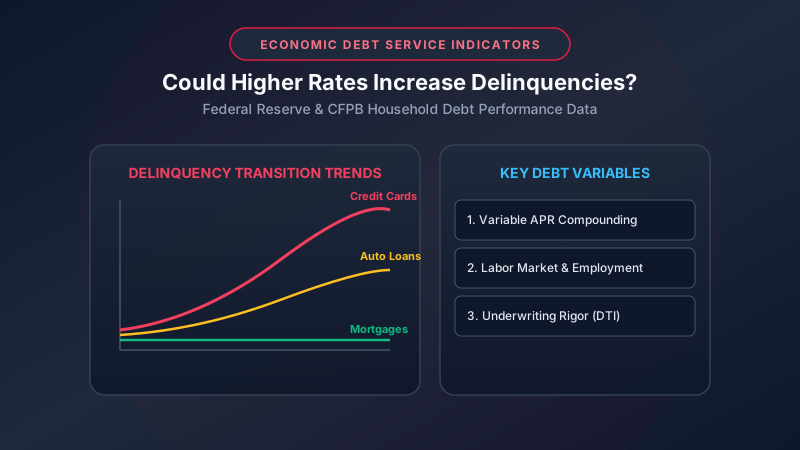
Economists refer to this accumulation as phantom debt. Because BNPL transactions historically bypassed traditional credit checks (utilizing soft credit pulls rather than hard inquiries), consumers could acquire 5 to 10 active installment plans simultaneously across different BNPL provider apps.
If a consumer suffers a temporary income delay, bi-weekly auto-debits hit their bank account concurrently. This can trigger bank overdraft-protection-explained charges or lead to BNPL late fees (typically $5 to $15 per missed installment), compounding the total cost of everyday goods.
Furthermore, consumers who rely on revolving credit cards to fund bi-weekly BNPL installments inadvertently stack interest charges on top of installment loans, accelerating household debt accumulation.
3. CFPB Regulatory Oversight: The May 2024 Interpretive Rule
For years, BNPL providers operated in a regulatory grey zone, asserting that short-term, zero-interest credit did not fall under traditional credit card disclosure laws under the Truth in Lending Act (Regulation Z).
In May 2024, the Consumer Financial Protection Bureau issued a landmark Interpretive Rule establishing that BNPL providers meeting the definition of digital credit card issuers are subject to key Regulation Z requirements. Under this rule, BNPL providers must:
-
Provide Dispute Rights: Consumers have the legal right to dispute billing errors, defective merchandise, or unreceived items directly with the BNPL provider, requiring funds to be paused during investigation.
-
Mandate Transparent Refund Processing: Providers must promptly credit returned merchandise back to the consumer's installment balance.
-
Issue Clear Billing Statements: Consumers must receive written or electronic statements detailing upcoming payment dates, outstanding balances, and fee schedules.
This regulatory enforcement aims to level the consumer protection playing field between traditional credit cards and point-of-sale installment apps.
4. Credit Bureau Reporting Changes
Historically, major nationwide credit bureaus—Equifax, Experian, and TransUnion—did not include BNPL installment data on consumer credit reports. This prevented responsible BNPL usage from building positive credit history while masking total consumer debt loads from mortgage lenders.
Credit reporting agencies have introduced specialized reporting frameworks to incorporate BNPL data. However, reporting mechanisms differ:
-
Short-Term Pay-in-4 Reporting: Bureaus are developing distinct trade line indicators for short-term bi-weekly plans so that opening multiple small BNPL accounts does not penalize consumer credit scores by artificially lowering the average age of accounts.
-
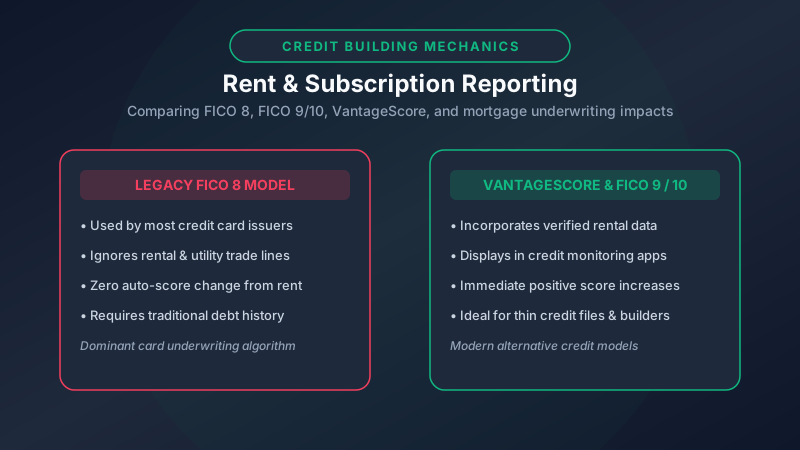
Scoring Model Integration: Legacy credit scoring models, such as FICO 8, may not immediately factor BNPL trade lines into credit score calculations, whereas newer models like VantageScore 4.0 are designed to incorporate non-traditional payment history.
Consumers seeking to build credit history effectively should evaluate whether traditional products—such as secured cards or structured personal-loans-vs-credit-cards—offer more predictable bureau reporting.
Comparative Analysis: BNPL vs. Traditional Credit Cards
The table below highlights the operational differences between BNPL and credit cards for everyday spending:
| Feature / Dimension | Pay-in-4 BNPL | Traditional Credit Card |
| :--- | :--- | :--- |
| Interest Rate | 0% if paid on schedule | 20% - 29% APR if carrying balance |
| Payment Term | Fixed bi-weekly over 6 weeks | Flexible monthly revolving balance |
| Credit Check | Soft inquiry (usually) | Hard inquiry at application |
| Merchant Cost | High (3% - 6% merchant fee) | Standard (1.5% - 2.5% interchange) |
| Dispute Rights | Reg Z parity enforced by CFPB | Longstanding Reg Z dispute rights |
| Over-extension Risk| Multiple simultaneous micro-loans | Single consolidated credit limit |
Practical Guidelines for Managing Everyday BNPL Usage
To prevent BNPL from destabilizing monthly cash flow, financial experts recommend these practical controls:
-
Limit Active Installments: Maintain no more than two active BNPL plans at any given time.
-
Avoid BNPL for Perishable Goods: Avoid using installment credit for food, gas, or daily consumables that are consumed long before the final installment payment is due.
-
Track Auto-Debits: Link BNPL payments to a debit card backed by a liquid buffer to avoid unexpected bank overdraft fees.
-
Audit True Costs: Verify whether merchant prices are marked up to absorb BNPL processing fees before selecting installment checkout.
When used disciplined for single, planned purchases, BNPL provides zero-interest flexibility. However, relying on bi-weekly credit to cover routine daily expenses signals an underlying cash flow imbalance that requires structural budgeting adjustments.
5. Merchant Discount Fees and Indirect Retail Price Inflation
While BNPL platforms market zero-interest financing to consumers, the underlying economics rely heavily on merchant fees. Merchants pay BNPL providers discount fees ranging from 3% to 6% per transaction—substantially higher than standard credit card interchange fees of 1.5% to 2.5%.
To absorb these higher merchant discount rates without eroding profit margins, retailers across everyday categories may gradually increase base retail prices for all items. Consequently, cash and debit card buyers indirectly subsidize the point-of-sale financing infrastructure utilized by BNPL shoppers. Understanding these merchant economics clarifies why zero-commission payment models still exert economic costs on the broader retail marketplace.
6. Regulatory Risk Disclosures and Consumer Financial Literacy
As BNPL becomes integrated into daily checkout routines, consumer advocates emphasize the need for enhanced financial literacy surrounding short-term installment debt.
Unlike traditional credit card statements—which prominently display calculated payoff timelines and total interest costs under federal CARD Act rules—BNPL bi-weekly schedules can obscure total annual financing costs if late fees are triggered. Financial literacy organizations recommend treating BNPL installments as committed monthly debt obligations, factoring bi-weekly payments into overall debt-to-income (DTI) calculations when planning major financial milestones such as applying for a mortgage or personal loan.
MoneyTalkin' provides financial education, educational concepts, and general informational guides. Articles do not constitute personalized financial, investment, legal, or tax advice. Financial products, rates, terms, and regulatory rules change frequently; consult a qualified financial professional regarding your specific situation. Read our full Disclaimer Policy.
Written by MoneyTalkin'
MoneyTalkin' researches and publishes objective financial education content, money management fundamentals, and practical financial guides.