Are Digital Neobanks Safe? Security, Deposit Insurance & Safety Analysis
An in-depth analysis of neobank security, deposit protection rules (FDIC/FSCS), operational risks, and essential safety checklists for digital banking.
Over the past decade, digital-only banks—commonly referred to as neobanks or fintech banking apps—have rapidly transformed consumer banking. Brands like Chime, Revolut, Varo, N26, and Current have attracted tens of millions of customers by offering fee-free checking accounts, early direct deposit, high-yield savings rates, and sleek mobile app experiences.
However, as neobanks operate without traditional physical brick-and-mortar branches, a vital question arises for everyday consumers: Are digital neobanks actually safe for your hard-earned money?
The short answer is yes, most established neobanks are safe—provided you understand how they are structurally configured and verify their FDIC or NCUA insurance arrangements. In this comprehensive guide, we will examine the regulatory architecture of neobanks, analyze pass-through insurance mechanisms, evaluate cyber security protocols, highlight operational risks to watch out for, explore real-world bankruptcy case studies, analyze compliance frameworks, and provide a comprehensive safety checklist before opening an account.
What Is a Neobank? (Traditional Bank vs. Fintech App)
To evaluate safety, it is essential first to understand what a neobank actually is. Strictly speaking, most popular "neobanks" are fintech tech software companies, not licensed chartered banks.
TRADITIONAL CHARTERED BANK:
[ Customer ] ---> Direct Deposit ---> [ Bank (Holds Charter & Direct FDIC Insurance) ]

NEOBANK (FINTECH PARTNERSHIP MODEL):
[ Customer ] ---> App Interface ---> [ Neobank (Fintech Firm) ] ---> Sweeps Funds ---> [ Partner Chartered Bank (Holds FDIC Insurance) ]
The Legal Distinction
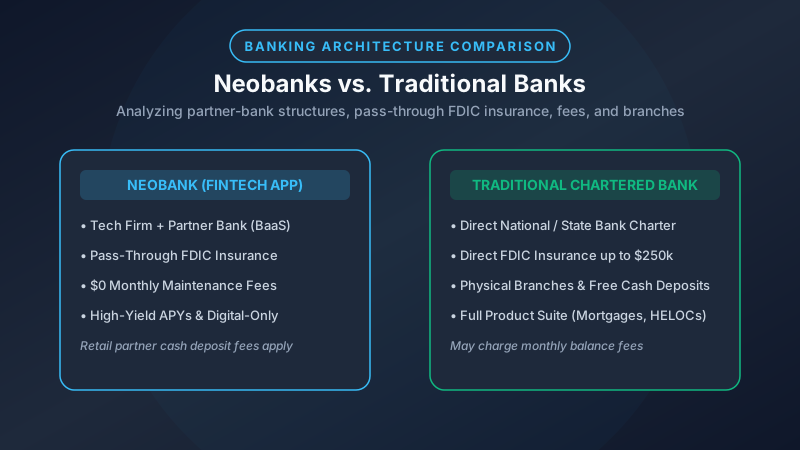
- Traditional Bank (e.g., Chase, Bank of America): Holds a state or national banking charter issued by federal regulators (such as the Office of the Comptroller of the Currency - OCC, or Federal Reserve). They hold deposits directly and carry direct FDIC insurance.
- Neobank / Fintech App (e.g., Chime, Current): Typically does not hold a banking charter itself. Instead, it builds a modern software interface and partners with an established, chartered financial institution (such as Bancorp Bank, Stride Bank, or Evolve Bank & Trust) to manage deposit accounts and issue debit cards.
Important Exception: A few digital banks (like Varo Bank or Ally Bank) have secured full national banking charters and operate as direct FDIC-insured chartered financial institutions.
How FDIC Insurance Works for Neobanks
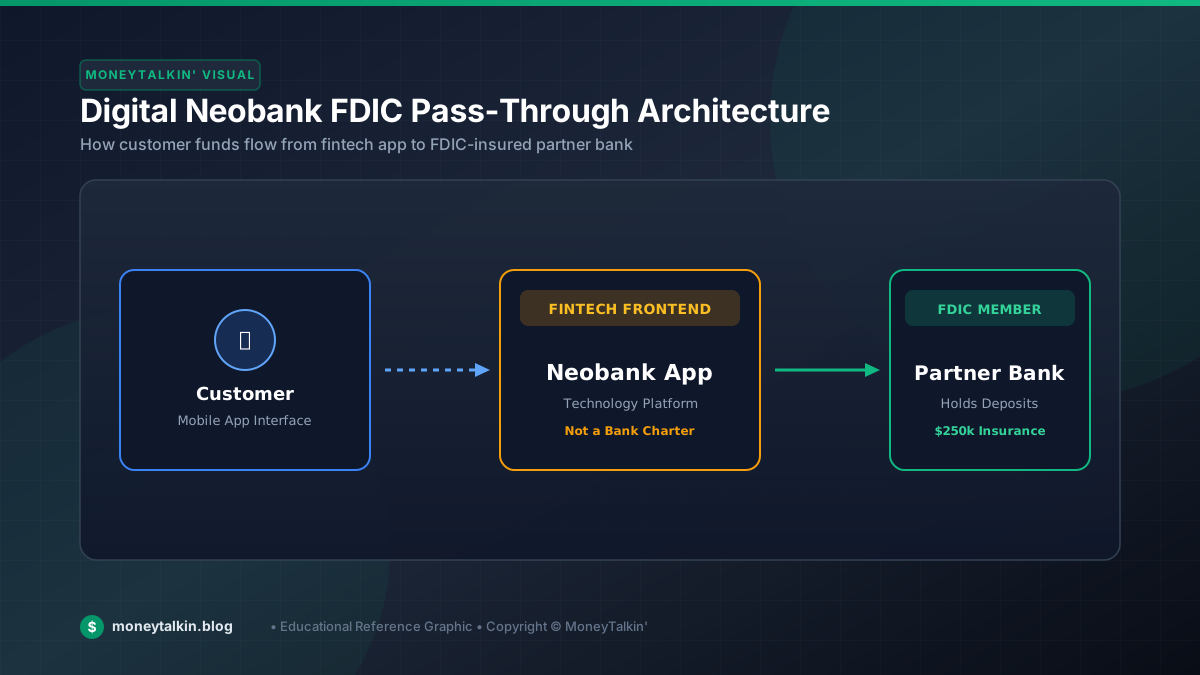
Federal Deposit Insurance Corporation (FDIC) insurance is the bedrock of consumer banking safety in the United States. It guarantees deposit balances up to $250,000 per depositor, per insured bank in the event of a bank failure.
When you deposit money into a neobank, how does FDIC insurance protect you?
Pass-Through FDIC Insurance Explained
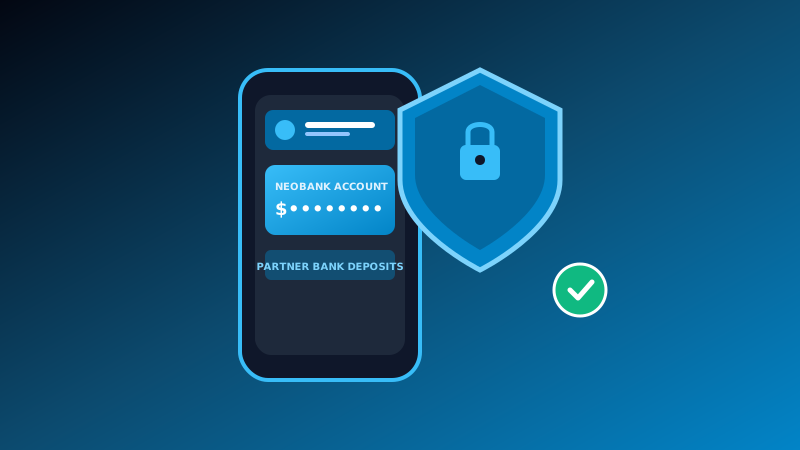
Neobanks utilize a structure called pass-through FDIC insurance. When you deposit funds into your neobank app:
- The neobank transfers ("sweeps") your funds directly into an omnibus or individual custodial account at their FDIC-insured partner bank.
- Because the partner bank is FDIC-insured, your personal funds are insured up to $250,000—provided the neobank maintains accurate ownership ledgers identifying you as the ultimate beneficial owner of those funds.
| Safety Feature | Traditional Chartered Bank | Partner-Model Neobank | Chartered Neobank (e.g. Varo) |
|---|---|---|---|
| Banking Charter | Direct National/State Charter | No Charter (Fintech Layer) | Direct National Charter |
| FDIC Insurance Type | Direct FDIC Insurance | Pass-Through FDIC Insurance | Direct FDIC Insurance |
| Deposit Limit | $250,000 per depositor | $250,000 per partner bank | $250,000 per depositor |
| Physical Branches | Yes (Local branches) | None (100% Mobile/Web) | None (100% Mobile/Web) |
| Regulatory Oversight | OCC, Fed, FDIC | Partner Bank Overseen by FDIC | OCC, Fed, FDIC |
Potential Safety Risks and Vulnerabilities of Neobanks
While the underlying deposits in partner banks are backed by the federal government against bank insolvency, using a neobank presents specific operational and structural risks that differ from traditional banks.
1. Intermediary Ledger Bankruptcy & Operational Failure
If the fintech neobank company goes bankrupt or suffers severe financial trouble, what happens to your cash? Because the money is held at the partner bank, your funds are safe from the neobank's creditors. However, access to your money can be frozen or delayed if the neobank's record-keeping database suffers an outage, reconciliation dispute, or legal freeze.
A prime real-world example occurred during the Synapse bankruptcy crisis in 2024, where a middleware platform between fintech apps and partner banks collapsed due to ledger discrepancies, leaving thousands of end-users unable to access their funds for months while accounts were manually audited by bankruptcy trustees.
2. Algorithmic Account Locks and Automated Fraud Controls
Because neobanks do not operate physical branches with in-person tellers, they rely heavily on automated algorithms and machine-learning models to detect fraudulent activity, money laundering, and unusual deposit patterns.
- The Risk: If an algorithm flags your account by mistake (e.g., after receiving a large tax refund, freelance payment, or international wire transfer), your account may be automatically locked.
- The Challenge: Resolution through automated customer support bots or offshore call centers can take days or weeks, leaving you temporarily cut off from your funds.
3. Customer Service Accessibility
Traditional banks allow you to walk into a physical branch and speak directly with a branch manager if your debit card is blocked or your account is frozen. Neobanks rarely provide in-person support and sometimes lack 24/7 telephone lines, relying on in-app messaging and ticket systems.
Cyber Security Standards in Modern Neobanks
From a pure technical cybersecurity standpoint, modern neobanks are often built on newer, more secure cloud infrastructure than legacy banking institutions. Leading neobanks employ rigorous security protocols:
- Bank-Level Encryption: AES 256-bit encryption for stored data at rest and TLS 1.3 encryption for data in transit across mobile networks.
- Multi-Factor Authentication (MFA): Mandatory biometric authentication (Face ID, fingerprint recognition) combined with SMS or authenticator app One-Time Passwords (OTPs).
- Instant Card Control: The ability to toggle debit cards on or off instantly within the mobile app if lost or stolen.
- Real-Time Transaction Alerts: Immediate push notifications sent to your smartphone every time a charge occurs, allowing instant detection of unauthorized activity.
Technical Deep Dive: Middleware APIs and Data Pipelines
Understanding the technical architecture behind neobank apps reveals how your data and money flow behind the scenes.
USER INTERACTION:
[ Mobile App (iOS / Android) ]
             |  (TLS 1.3 Encrypted REST / GraphQL API)
             v
[ Neobank Cloud Microservices (AWS / GCP) ]
             |  (Core Banking API Ledger Synchronization)
             v
[ Middleware API (e.g., Plaid / Synapse / Unit / Bond) ]
             |  (FedWire / ACH Sweep Network)
             v
[ Chartered Partner Bank Core Database (FDIC Insured) ]
When you initiate a transaction or transfer:
- API Call: The mobile app executes an encrypted request to the neobank's microservices running on cloud platforms like AWS or Google Cloud.
- Ledger Update: The neobank updates its internal virtual ledger reflecting your balance change.
- ACH Sweep: At designated daily cutoff times, net funds are swept across the Automated Clearing House (ACH) network into the partner bank's master custodial account.
Comparing Popular Digital Neobanks & Features
| Neobank Name | Charter Status | FDIC Partner Institution | Early Direct Deposit | Fee Structure |
|---|---|---|---|---|
| Chime | Fintech Partner Model | The Bancorp Bank / Stride Bank | Up to 2 days early | Zero monthly fees, fee-free overdraft |
| Varo Bank | Direct National Charter | Varo Bank, N.A. (Direct FDIC) | Up to 2 days early | Zero monthly fees, high-yield savings |
| Revolut | Fintech / Int. Charter | Metropolitan Commercial Bank | Available | Free basic tier, paid premium tiers |
| Current | Fintech Partner Model | Choice Financial Group | Up to 2 days early | Zero monthly fees, points back |
| Ally Bank | Direct National Charter | Ally Bank (Direct FDIC) | Available | Zero monthly fees, robust CD rates |
5-Step Neobank Safety Checklist Before You Sign Up
Before depositing your primary income or emergency savings into a digital neobank, verify these five critical criteria:
[ Step 1: Verify Partner Bank Name on Neobank Website ]
                         |
                         v
[ Step 2: Search Partner Bank in FDIC BankFind Directory ]
                         |
                         v
[ Step 3: Confirm Pass-Through Insurance Terms in Disclaimers ]
                         |
                         v
[ Step 4: Evaluate Customer Support Channels (Phone vs Chat) ]
                         |
                         v
[ Step 5: Diversify Emergency Cash Across 2 Financial Institutions ]
1. Search the FDIC BankFind Directory
Look at the footer of the neobank's website. Find the fine print stating "Banking services provided by [Partner Bank Name], Member FDIC." Then go to the official FDIC BankFind Portal and confirm that the partner institution is active and in good standing.
2. Check Customer Support Options
Test customer support before depositing money. Does the app provide phone support for urgent account lockouts, or is support restricted to asynchronous email forms?
3. Maintain a Secondary Bank Account
Never keep 100% of your operational capital in a single financial institution—whether traditional or digital. Maintain a backup checking account at a brick-and-mortar bank or credit union so you are never left stranded if your primary app experiences a system outage or anti-fraud freeze.
Frequently Asked Questions (FAQ)
Are neobanks safer than traditional banks?
Neobanks are generally as safe as traditional banks regarding deposit protection up to $250,000, provided pass-through FDIC insurance is active. However, traditional banks offer better in-person support and direct regulatory oversight, whereas neobanks excel in digital usability and lower fees.
What happens to my money if a neobank goes out of business?
Because your funds are held at an FDIC-insured partner bank rather than by the neobank itself, your deposits remain intact at the partner bank. You will be able to claim your funds through the partner bank, though processing times may vary depending on ledger accuracy.
Are digital neobanks regulated by the government?
While fintech neobanks themselves are regulated under consumer protection and technology laws, their banking services are governed by federal regulators (FDIC, OCC, Consumer Financial Protection Bureau) through their underlying chartered partner banks.
How do neobanks make money if they don't charge monthly account fees?
Neobanks generate revenue primarily through interchange fees. Every time you swipe your neobank debit card, the merchant pays a small transaction fee (typically 1% to 2%), a portion of which is shared by Visa or Mastercard with the neobank.
Can I deposit physical cash into a digital neobank account?
Yes, many neobanks partner with retail networks (such as Green Dot, Walgreens, or 7-Eleven) allowing cash deposits at register counters, though retail service fees of $3.95 to $4.95 per deposit may apply.
Editorial Summary & Related Guides
Digital neobanks offer unmatched convenience, zero-fee structures, and high interest rates. As long as you choose a neobank with verified FDIC pass-through insurance and maintain a backup account at a traditional institution, neobanks are a safe, modern tool for managing your daily finances.
Explore related guides on banking safety and digital security:
- Bank Account Security Checklist
- High-Yield Savings vs. Fixed Deposits
- Digital Financial Safety Guide
Disclaimer: MoneyTalkin' provides financial educational content for informational purposes only. We do not endorse specific financial products or apps. Always verify FDIC insurance status directly with regulatory authorities before opening a financial account.
MoneyTalkin' provides financial education, educational concepts, and general informational guides. Articles do not constitute personalized financial, investment, legal, or tax advice. Financial products, rates, terms, and regulatory rules change frequently; consult a qualified financial professional regarding your specific situation. Read our full Disclaimer Policy.
Written by MoneyTalkin'
MoneyTalkin' researches and publishes objective financial education content, money management fundamentals, and practical financial guides.
Related Technical Articles
Explore related topics in this cluster to deepen your understanding.